Last updated: June 2026 — prices verified June 2026.
I’ve lived in Kotor for three years. I chose it over Dubrovnik, which is 50km away, specifically because it has the same medieval walled city energy without the six cruise ships a day. I have strong views about this, which I’ll make clear. Here’s the honest comparison.
The Quick Verdict
Cost: The Gap Is Real and Significant
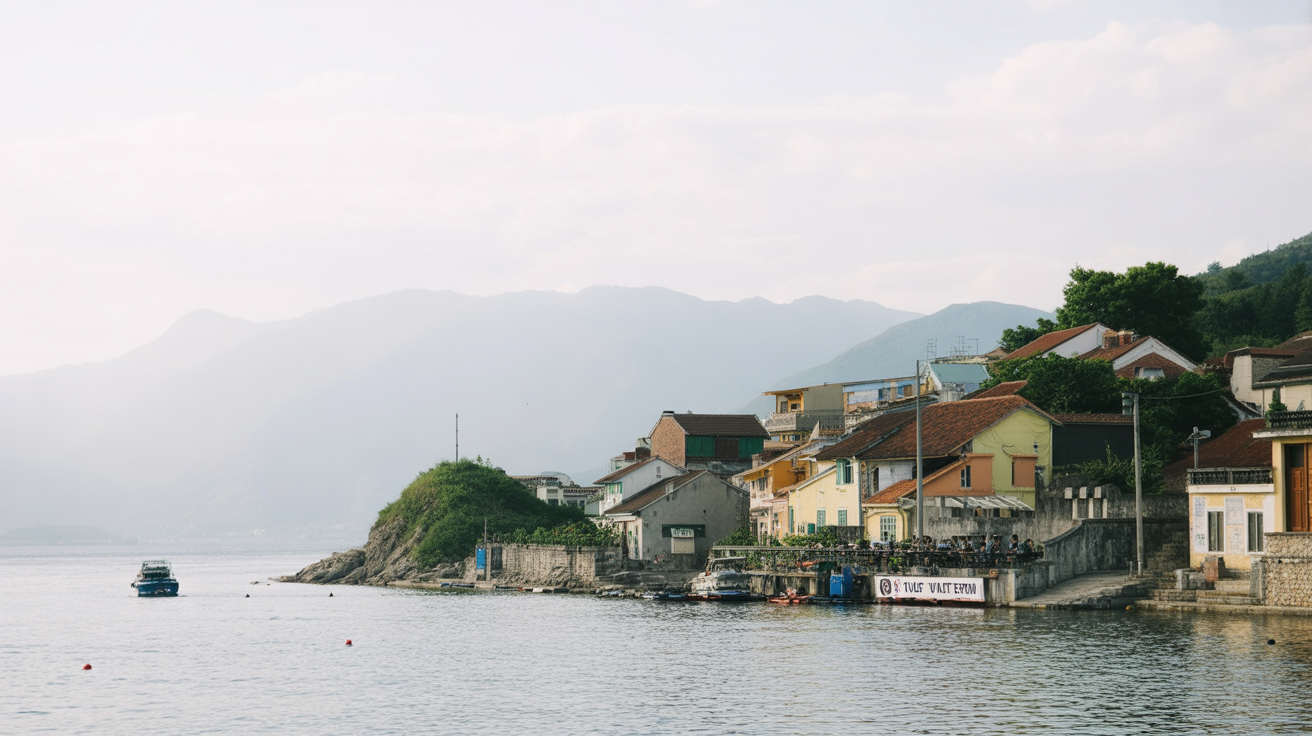
Montenegro is not just slightly cheaper than Croatia. It is consistently 30–40% cheaper across virtually every spending category. This is not a marginal difference — it changes what you can do with a given budget.
For a practical example: one traveller’s two-week Balkans trip reported paying an average of $39/night in Montenegro and $63/night in Croatia for comparable accommodation — a 62% premium for Croatia. The food differential was smaller ($50/day Montenegro vs $47/day Croatia) but the entertainment/activities gap was the reverse — Croatia’s paid attractions (Plitvice Lakes, Dubrovnik walls) are more expensive individually.
The full Montenegro budget breakdown: Montenegro Budget Per Day.
The Crowd Problem: Dubrovnik vs Kotor
Both countries have a significant cruise ship problem in July and August. The scale in Croatia is larger.
Dubrovnik receives up to 10,000 cruise passengers per day in peak season — some mornings, eight ships dock simultaneously. The Old Town of Dubrovnik (a UNESCO site, genuinely extraordinary) becomes almost physically impossible to enjoy between 10am and 2pm in July. The city has implemented visitor caps and cruise ship limits in recent years; they help, but the volume is still significant.
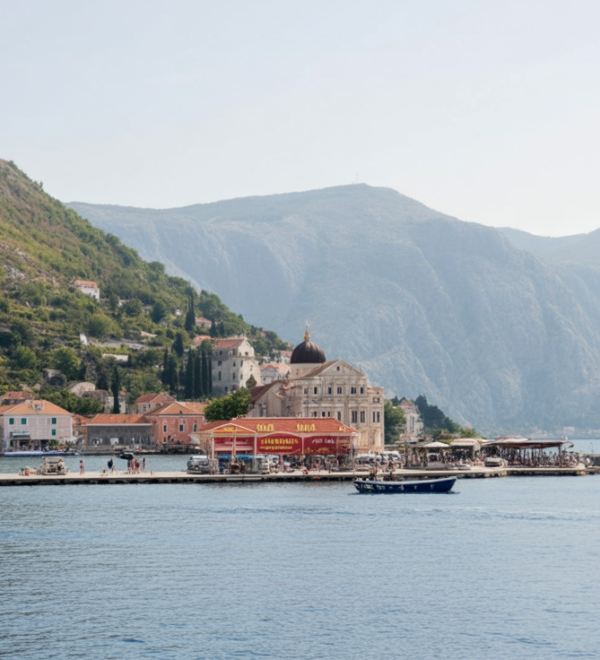
Kotor receives cruise ships too. On a busy summer day, three or four ships can dock in the bay, and the old town gets crowded. But Montenegro’s crowd problem is more manageable because the rest of the country — Durmitor, Tara Canyon, the northern mountains, the smaller coastal towns — absorbs visitors in a way that Croatia’s overloaded hotspots cannot.
•TOM’S PICK
Kotor Old Town at 7am before the cruise ships arrive. The same Old Town at noon in July: 400 people queueing to climb the walls. These are not the same experience. If you’re in Kotor in summer, do the wall walk at 7am, do the streets and churches between 8am and 10am, and retreat to Perast or the bay for the midday hours. The cruise ship schedules are published online — check them before you plan your day.
Old Towns: Kotor vs Dubrovnik
Both have UNESCO-listed medieval walled old towns with limestone streets, Venetian-era architecture, and restaurants that charge double because of the location. Both are genuinely worth visiting. They are not interchangeable.
Dubrovnik is more dramatic and more complete — the walls are intact, the Old Town is larger, the backdrop of the Adriatic is more photogenic. It is also significantly more expensive and, in peak season, more crowded than almost any other city in Europe. The Dubrovnik walls walk (€35–40) is the signature experience and it delivers what it promises. So does the queue to get on it.
Kotor’s Old Town is smaller, less dramatic from outside, and — if you go at the right time — considerably more enjoyable to actually be in. The walls walk costs €8 (~£6.90). The Old Town itself has a character that Dubrovnik, under its weight of visitors, has partly lost. The cats are also a genuine local phenomenon, not a tourist gimmick — they have been living in the Kotor Old Town since the Venetians arrived. See Things to Do in Kotor for the full guide.
If you’re doing a Balkans trip that includes Dubrovnik anyway: add Kotor as a day trip (50km south, easily doable) and compare them directly. Most people who do this come away with an opinion they didn’t expect to have.
Beaches: Croatia Has More, Montenegro Has Cleaner
Croatia’s island-dotted Dalmatian coast has hundreds of beaches — pebble, sand, hidden coves accessible only by boat, established beach clubs, nudist sections, family beaches, the full range. The variety is genuine and the infrastructure at the better beaches is good. The water is excellent. But in July–August, the better beaches get crowded, and the island ferry queues are a real logistics issue.
Montenegro has fewer beaches and less variety. What it has: Budva and the Budva Riviera for the party beach scene (fine, genuinely crowded in August); Ada Bojana at the Albanian border for a more relaxed island beach atmosphere; and the Bay of Kotor coast, which is not a beach destination but has swimming spots off rocky shores that are largely free of the crowd problem. The water quality in Montenegro is consistently cited as cleaner than Croatia’s more visited spots — less boat traffic, fewer marinas, more intact coastline.
For beach priority: Croatia wins on variety and infrastructure. Montenegro wins on quietness and cost. If beaches are the primary reason you’re going, Croatia is the right answer.
Food and Drink: Similar Quality, Very Different Prices
Croatian coastal food is excellent — seafood-forward, Mediterranean, with strong Italian influence from centuries of Venetian rule. A grilled fish platter in Split or Dubrovnik at a good waterfront konoba runs €20–35 per person. The wine is genuinely good. The olive oil is outstanding. The bread basket costs €3 before you’ve ordered anything, which is the first sign you’re paying a location premium.
Montenegrin food is similar in character — the Adriatic coast means the same seafood, the same grilled fish, the same lamb dishes, with a slightly stronger Serbian influence inland (ćevapi, njeguški steak, smoked meats from the mountains). The prices are substantially lower. The same grilled fish platter that costs €30 in Dubrovnik costs €15–18 in Kotor. The njeguški steak — a Montenegrin specialty from the highland village of Njeguši, made from smoked beef or pork with local cheese — has no Croatian equivalent and is worth ordering specifically.
Montenegrin wine is underrated and locally produced. Plantaže near Podgorica produces the bulk of it — their Vranac (a deep, dark plum-and-cherry red made from the native Vranac grape) is the one to try and it costs €3–5 for a glass in any decent restaurant. Croatian wine — particularly Plavac Mali from Dalmatia and Malvazija from Istria — is better known internationally, more varied, and more expensive.
Coffee culture: both countries do espresso properly. Montenegro’s café scene has a specific pace to it — the macchiato at a Kotor Old Town café is €1–1.50, compared to €2.50–3.50 in Dubrovnik. The difference compounds over a week of morning coffees.
Getting There: Flights and Accessibility
Croatia is easier to fly to from most European cities — significantly so. Dubrovnik Airport (DBV), Split Airport (SPU), and Zagreb Airport (ZAG) all receive direct flights from dozens of European hubs, with budget carriers including Ryanair and easyJet operating frequent routes in peak season. From London, a Dubrovnik flight in summer can be found for £40–120 return. From most other northern European cities, similar.
Montenegro has two main airports: Tivat (TIV, near Kotor, coastal) and Podgorica (TGD, the capital). Direct flight options are fewer — primarily Wizz Air and Air Montenegro from certain hubs, with more connections via Belgrade, Vienna, or Istanbul. From the UK, a direct flight to Tivat is available in summer but limited; year-round the most practical option is often Dubrovnik + bus, or a connection through a hub city. This is the single biggest practical advantage Croatia has — you can be on the ground in Dubrovnik faster and more cheaply than Kotor from most European origins.
If you’re combining both countries (which is easy and recommended), flying into Dubrovnik and out of Tivat — or vice versa — is a very clean routing. The distance between the two airports is about 90 minutes by road, with the border crossing at Debeli Brijeg adding 15–45 minutes.
Combining Montenegro and Croatia: The Natural Itinerary
The two countries sit on the same coast and the combination is natural — most people who visit one end up in the other within the same trip. The standard routing:
South to north (more common): Fly into Dubrovnik → spend 2–3 nights → cross into Montenegro (Kotor 2 nights, Budva 1 night optional, Perast day trip) → return to Dubrovnik or continue north through Croatia to Split and the islands.
North to south: Fly into Split → work south through the Dalmatian coast (Hvar, Korčula, Pelješac) → Dubrovnik → day trip or overnight to Montenegro → fly out from Dubrovnik or Tivat.
Either works. The Dubrovnik–Kotor connection specifically is one of the most natural day-trip routes in the Adriatic — 50km, one border crossing, and you have both UNESCO old towns in a single long day. The day trip guide covers this in full detail, including the border timing and what to prioritise.
Budget for a combined trip: daily costs will average somewhere between the two countries’ individual ranges — roughly €80–130/day for a mid-range independent traveller covering both. The Montenegro portion will bring the average down; the Croatia portions (especially Dubrovnik accommodation) will bring it back up.
Montenegro’s One Major Disadvantage: Infrastructure
Right, let’s be straight about this. Montenegro has been developing its tourism infrastructure rapidly since independence in 2006, and it shows — there are good hotels, good restaurants, good tour operators now in Kotor, Budva, and Durmitor. But outside the main tourist areas, the infrastructure gap versus Croatia is real.
Public transport is limited beyond the main coastal towns — if you want to explore Durmitor, the Tara Canyon, or the smaller inland towns without a hire car, you’ll need to organise logistics more carefully than in Croatia. The roads are generally good on the main routes but secondary roads in the mountains require attention; Montenegro “demands more driver attention overall” than Croatia, particularly on the mountain passes.
Restaurant and hotel quality varies more than in Croatia — you’ll find excellent places and mediocre places adjacent to each other in Kotor, and the gap between them isn’t always obvious from the outside. Croatia’s more mature tourism market has produced more consistent mid-range quality across the board.
For safety context including practical driving information: Is Montenegro Safe? covers the full picture.
Mountains and Nature: Montenegro’s Clear Advantage
Here’s where Montenegro pulls away decisively. Durmitor National Park — the dramatic plateau with 48 glacial lakes, the Tara Canyon (1,300-metre-deep gorge, the deepest in Europe after the Grand Canyon), and winter ski infrastructure — has no Croatian equivalent. Rafting the Tara in spring snowmelt is a specific experience that has no substitute on the Croatian side of the border.
Croatia has Plitvice Lakes (spectacular, heavily visited, worth the entry fee — plan to arrive at gate opening, not mid-morning) and the Dalmatian inland areas. They’re good. They’re not Durmitor.
The Tara Canyon specifically: 1,300 metres deep, the deepest gorge in Europe after the Grand Canyon, with a rafting season from April to October when the snowmelt fills the river. The rafting trip takes most of a day, runs through a section of canyon that has no road access, and costs around €40–60 per person for a half-day run or €80–120 for a full-day. There is no equivalent activity in Croatia at this scale or at this level of isolation from other tourists.
Durmitor Black Lake (Crno Jezero): a glacial lake at 1,416 metres altitude, surrounded by black pine forest, accessible by car from Žabljak and then a 20-minute walk. The lake is cold even in August. The reflection of the Durmitor peaks on a calm morning is one of the better things I’ve seen in three years of living in Montenegro, and I’ve been back five times. The entry fee is €3. Croatia charges €30–35 for Plitvice, which is also a glacial lake system and also worth it, but you’ll be sharing the wooden walkways with a significant number of other people.
For anyone whose Adriatic trip ambitions include both coast and mountains in the same week — rather than spending an entire trip on the coast — Montenegro is unambiguously the correct choice.
The full guide to the mountain side of Montenegro: Things to Do in Budva covers the coastal side, and the Montenegro Best Time guide covers the seasonal window for Durmitor specifically.
The Confession: What Happened When I Ignored the Cruise Ship Schedule
I booked a sunset terrace dinner in Kotor Old Town for a Tuesday in July — a nice restaurant on the main square, terrace overlooking the square itself, the kind of thing that sounds excellent in principle.
Three cruise ships were in port that day. I had not checked the schedule. The terrace had 200 people on it by 7pm, the service was stretched, and the experience bore no resemblance to the quiet terrace dinner I’d imagined. The food was fine. The sunset was, admittedly, still the sunset.
Check the cruise ship arrivals before booking anything in Kotor Old Town that requires a specific atmosphere. The schedule is published at the Port of Kotor website. On the days without ships — weekdays in shoulder season, any morning between 6am and 9am — Kotor is a completely different proposition.
FAQ: Montenegro vs Croatia
- Is Montenegro cheaper than Croatia?
- Yes — significantly. Montenegro runs 30–40% cheaper across virtually every category: accommodation (€50–100 vs €80–180/night for mid-range), food (€8–15 vs €15–25 for lunch), drinks (€2–3 vs €4–6 for a beer), car hire (€30–50 vs €50–80/day). For a 10-day trip, the savings are meaningful rather than marginal.
- Which is better for first-time visitors to the Adriatic?
- Croatia — better flight connections, more established tourism infrastructure, easier logistics. Montenegro is a stronger choice for a second Adriatic trip when you know what you’re looking for. That said, Montenegro is not difficult to navigate; the main limitation is fewer direct flights from most European cities, which often means connecting through Dubrovnik or Belgrade.
- Is Kotor worth visiting over Dubrovnik?
- Worth visiting differently. Dubrovnik is larger, more dramatic, more expensive, and in July–August significantly more crowded. Kotor is smaller, more manageable, costs less, and — at the right time of day — more enjoyable to actually be in. If you’re basing yourself on the southern Adriatic, do both: Dubrovnik and Kotor are 50km apart and easily combined.
- Which has better beaches — Montenegro or Croatia?
- Croatia on variety and infrastructure; Montenegro on cleanliness and quietness. Croatia’s Dalmatian island beaches are the more photogenic, with better beach club infrastructure and more choice. Montenegro’s coast has fewer beaches but cleaner water and significantly less competition for space — except Budva in August, which is its own category.
- Can you visit Montenegro and Croatia in the same trip?
- Yes — very naturally. The standard Balkans circuit is Dubrovnik → Kotor → Budva (or in reverse). Dubrovnik and Kotor are 50km apart; the border crossing at Debeli Brijeg takes 15–90 minutes depending on the season. A day trip from Dubrovnik to Montenegro is very doable — see the full guide at Dubrovnik to Montenegro Day Trip.
- When is the best time to visit Montenegro vs Croatia?
- May–June and September–October for both. July–August is peak season, crowded and expensive in coastal areas of both countries. Montenegro’s Durmitor and mountain areas are excellent in August even when the coast is packed — the mountains offer a genuine alternative that Croatia doesn’t have at the same scale. For the full Montenegro seasonal breakdown: Best Time to Visit Montenegro.
Where to Stay: Montenegro vs Croatia by Budget
The accommodation gap between the two countries is real and compounds over a trip. Here’s how it breaks down by tier.
Budget travellers: Montenegro wins clearly. A hostel dorm in Kotor Old Town costs €12–18/night; the equivalent in Dubrovnik Old Town runs €22–30. Private rooms in Montenegrin guesthouses — particularly in villages like Dobrota (1km from Kotor) or Perast — start at €35 in shoulder season. The same in Dubrovnik starts at €60.
Mid-range: The gap narrows slightly but stays significant. A decent guesthouse in Kotor or Budva: €50–80 in shoulder season, €80–110 peak. An equivalent in Split or Dubrovnik: €90–140 shoulder, €150–220 peak. The Montenegrin option often has better bay views for less money — the coast hasn’t been fully optimised for maximum yield yet.
Comfortable/luxury: Croatia has more established luxury properties with international brand recognition. Montenegro’s luxury market is growing — Aman Sveti Stefan is the headline act — but Croatia’s island hotels and Dubrovnik’s five-star options have more choice at the top end. If luxury is the brief, Croatia is the safer option. If an extraordinary setting matters more than a recognisable hotel brand, Montenegro’s Aman property or the Bay of Kotor boutique options are worth the research.
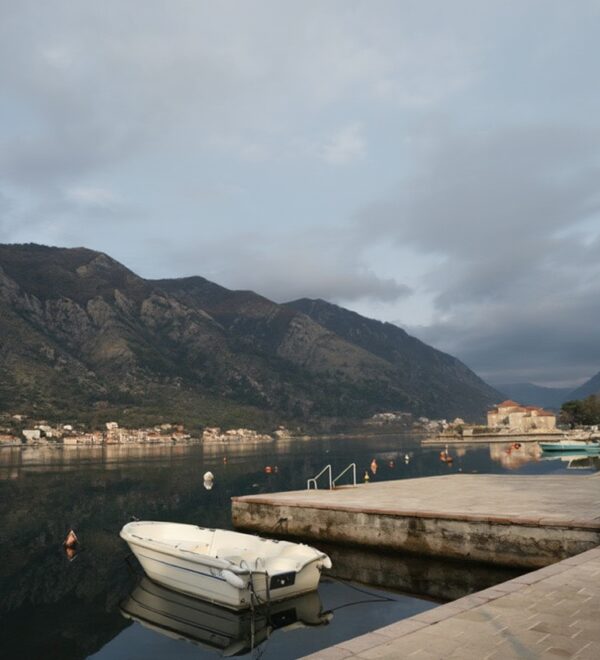
Tom’s honest take: I chose to live in Kotor rather than Dubrovnik. Part of that was cost — my flat costs €650/month in a location that would be €1,500+ in Dubrovnik’s equivalent. Part of it was the quiet. Kotor without the cruise ships is one of the genuinely calm places on the Adriatic. Dubrovnik without the cruise ships is… a smaller version of Dubrovnik with the cruise ships.
Practical Notes: Transport Between the Two Countries
The Dubrovnik–Kotor link is one of the most travelled routes on the coast. Here are the options, with honest timing.
By car (self-drive): 83km, roughly 1h45m in normal traffic. The border crossing at Debeli Brijeg adds 15–45 minutes in shoulder season, 45–90 minutes on busy summer weekends. The drive is coastal and scenic for most of its length. Hire car insurance must cover Montenegro — most major hire companies include it, confirm at booking.
By bus: Regular buses connect Dubrovnik to Kotor, Budva, and Herceg Novi. The Dubrovnik–Kotor bus takes around 2.5–3 hours including the border crossing. Price: approximately €15–20 one way. Several departures daily in summer from Dubrovnik bus station. No advance booking needed in shoulder season; buy online or at the station in July–August.
By organised day tour: Tours from Dubrovnik to Montenegro (Kotor and Perast) depart daily in summer from €30–68 per person including transport and guide. No border logistics stress — the guide handles it. Disadvantage: you’re on the tour’s schedule. The day trip guide from Dubrovnik covers this in full.
By taxi (private transfer): Dubrovnik to Kotor by private transfer costs approximately €80–100 for a car. Worth it split between four people, convenient for early morning or late night when buses don’t run.
Tom’s Picks by Traveller Type
The Montenegro vs Croatia question actually depends heavily on what kind of trip you’re doing. Here’s the honest routing by traveller type.
First-time Adriatic visitor: Croatia. Better flight connections, more infrastructure, the Dubrovnik experience that’s worth doing once. Montenegro can wait for the second trip.
Budget-conscious traveller: Montenegro. The 30–40% savings are real and consistent. Do Kotor, Budva, Perast, and the day trip to Durmitor. You’ll spend less and see things that Croatia’s tourist economy hasn’t absorbed yet.
Beach-first traveller: Croatia for variety and facilities. Montenegro if you want space and clean water over infrastructure.
Mountain + coast combination: Montenegro, unambiguously. Durmitor and the Tara Canyon have no Croatian equivalent. If your ideal trip involves one day on limestone cliffs above the sea and the next day in a 1,300-metre-deep river canyon, this is the one.
History and old towns: Both. Do Dubrovnik and Kotor in the same trip — they’re 50km apart and complement each other in a way that makes both more interesting than either alone.
Digital nomads / longer stays: Montenegro. A month in Kotor — €650/month apartment, €1.20 coffee, €4 Vranac — is genuinely liveable in a way Dubrovnik isn’t. The infrastructure is developing but functional. The Wi-Fi in the Old Town cafés is fine.
Families with children: Croatia has better-established family beach infrastructure — the island resorts, the established beach clubs, the clearer path for people who don’t want logistics surprises. Montenegro is doable with children but requires more planning.
The Bottom Line
One travel comparison put it simply: “Croatia is the stronger default answer. Montenegro is the sharper second answer.” That’s accurate.
If you’re new to the Adriatic and want established infrastructure, easy navigation, excellent beaches, and the Dubrovnik experience: Croatia. If you’ve done Croatia, want to spend less, and are interested in something rawer — the Bay of Kotor without the Dubrovnik crowd, Durmitor without the tour buses, a coastline that hasn’t fully been absorbed by the tourism machine: Montenegro.
Both countries are on the same coast. They’re not the same trip.
What makes Montenegro worth the extra effort of planning — the fewer direct flights, the more variable infrastructure, the need to check cruise ship schedules before booking a Kotor terrace — is that it still feels like a country that’s in the process of being discovered. The Bay of Kotor in May, with the mountains still holding snow and the tourist season not yet fully operational, is as good as anything on the Adriatic. The Tara Canyon in June, before the summer heat arrives, is better than anything Croatia offers at equivalent remoteness. The bill at the end of dinner, in both cases, is substantially lower than you’d pay for a comparable evening in Split or Dubrovnik.
Croatia is the established answer. Montenegro is the one worth discovering for yourself.
Questions below — I’m in Kotor if that helps with the credibility of this opinion.