Last updated: June 2026 — prices verified June 2026.
Montenegro is cheaper than Croatia, cheaper than Italy, and significantly cheaper than the UK. But it’s no longer the sub-€30/day bargain it was in 2019. The coast — particularly Kotor and Budva — has repriced upwards as visitor numbers have grown. The honest budget for independent travel is €40–55/day if you’re careful, €80–120/day for mid-range comfort. Here’s exactly what you’ll spend on.
I’ve been in Kotor for three years. I pay €650/month for a flat twenty minutes outside the walls. I know what a coffee costs at the tourist café on the main square (€2.50) versus at the place Montenegrins actually go (€1.20). I know that July in Budva is a different financial proposition from September in Kotor. Here’s the honest version.
The Quick Budget Tiers
Hostel dorms (€10–18), local restaurants and bakeries, buses between towns, free beaches and hiking. Achievable year-round — significantly easier in shoulder season when accommodation prices halve.
Private room or guesthouse (€40–70), sit-down restaurants, hired car for day trips, a boat tour or two. What most independent travellers actually spend when they stop optimising every decision.
Good hotels, nicer restaurants, private transfers. Still much cheaper than equivalent quality in Dubrovnik or the Italian Adriatic coast.
⚠Real Talk
Montenegro’s tourist tax — €1/person/day — is real and often not included in private rental prices. If you book an apartment directly with an owner rather than through Booking.com, you’ll typically pay this separately in cash. Budget for it.
Accommodation Costs
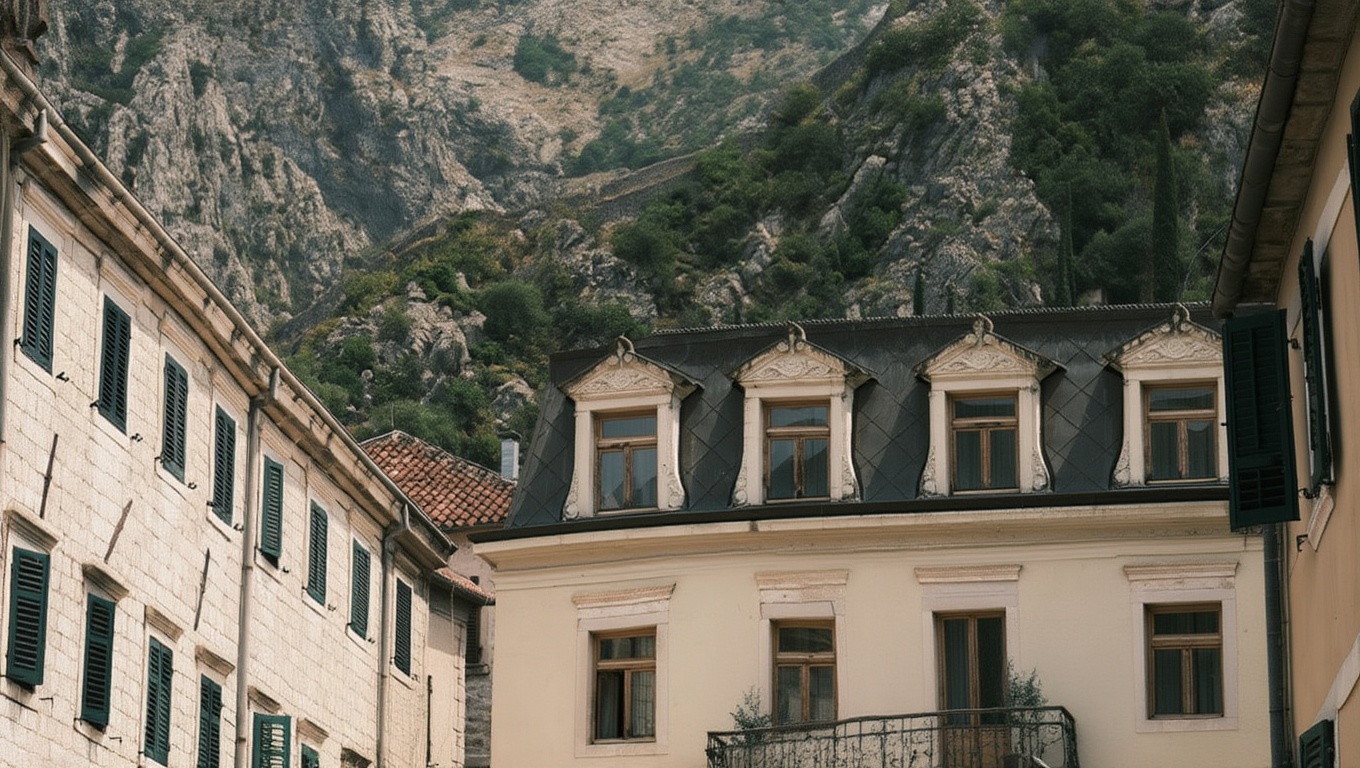
Hostels: Montenegro has a reasonable hostel scene in Kotor, Budva, Podgorica, and Herceg Novi. Dorm beds range from €7–10 in Podgorica to €15–18 in Kotor Old Town during peak season. Private rooms in hostels: €25–40. Even in July, Kotor hostels don’t fill up weeks in advance the way Croatian ones do — booking a few days ahead is usually sufficient.
Guesthouses and private rooms: The best value accommodation in Montenegro is private rooms and small guesthouses, particularly outside the main tourist strip. A clean private room in Kotor with en-suite: €35–55 in shoulder season, €60–80 in July and August. In Herceg Novi (30 minutes west, often overlooked): €30–50 year-round.
Budget hotels: €50–80/night for a proper hotel room in the coastal towns. In Podgorica, the same budget gets you something noticeably better — the capital is consistently underpriced relative to the coast.
Peak season note: July and August prices on the Budva riviera can double compared to June. An apartment that costs €60/night in September costs €100–120 in the first week of August. If you’re flexible, the financial case for shoulder season is substantial.
Mountain accommodation (Durmitor, Žabljak): Guesthouses with dinner and breakfast for €30–50/person. Excellent value — the mountain areas are significantly cheaper than the coast for equivalent quality.
Food Costs
Montenegro has a genuine local food culture and eating at local places costs a fraction of the tourist-facing menus.
Local restaurants (konoba style): A main course — grilled fish, lamb, veal — at a non-tourist konoba: €8–14. Add a local wine (Montenegro produces drinkable Vranac for €3–4/glass in local places) and you’re at €15–20 for a meal.
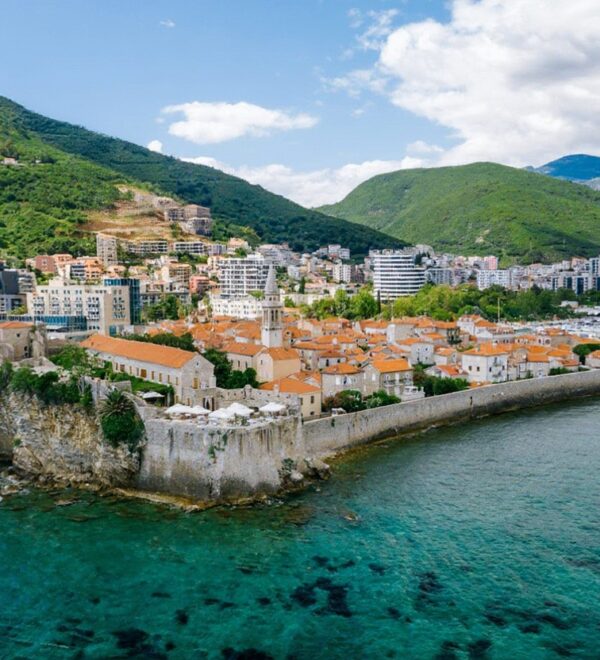
Tourist restaurants in Kotor Old Town / Budva seafront: €18–30 for a fish main. The view is priced in. Walk two streets back and the same grilled sea bass costs €12.
Bakeries: Montenegro has a bakery every hundred metres, especially outside tourist areas. A burek (cheese or meat filled pastry): €1–1.50. Fresh bread: €0.50. The bakery breakfast is the budget traveller’s best friend here.
Coffee: A macchiato at a local café — what Montenegrins actually drink: €1.20–1.50. The same at a tourist terrace in Kotor: €2.50–3. Know the difference.
Supermarkets: Voli and Idea are the main chains. Self-catering is practical — fresh produce is good, local cheese and cured meat are excellent, and the Montenegrin olive oil from the Bay of Kotor area is genuinely worth buying.
•MARCUS’S PICK
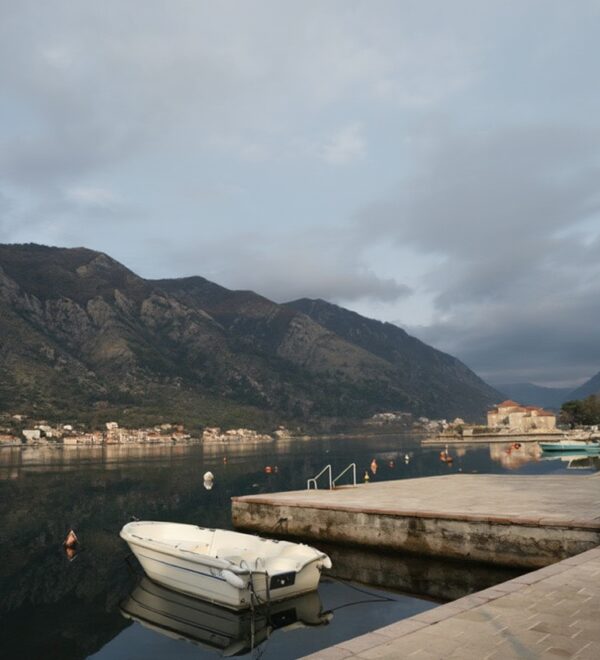
For the Bay of Kotor on a budget: the restaurants on the road between Kotor and Prcanj — not on the tourist strip, just off it — serve grilled fish at local prices with the same bay view. The fish is from the same boats.
Transport Costs
Montenegro is a small country — 14,000 square kilometres — but public transport is limited. Getting between the main destinations requires some planning.
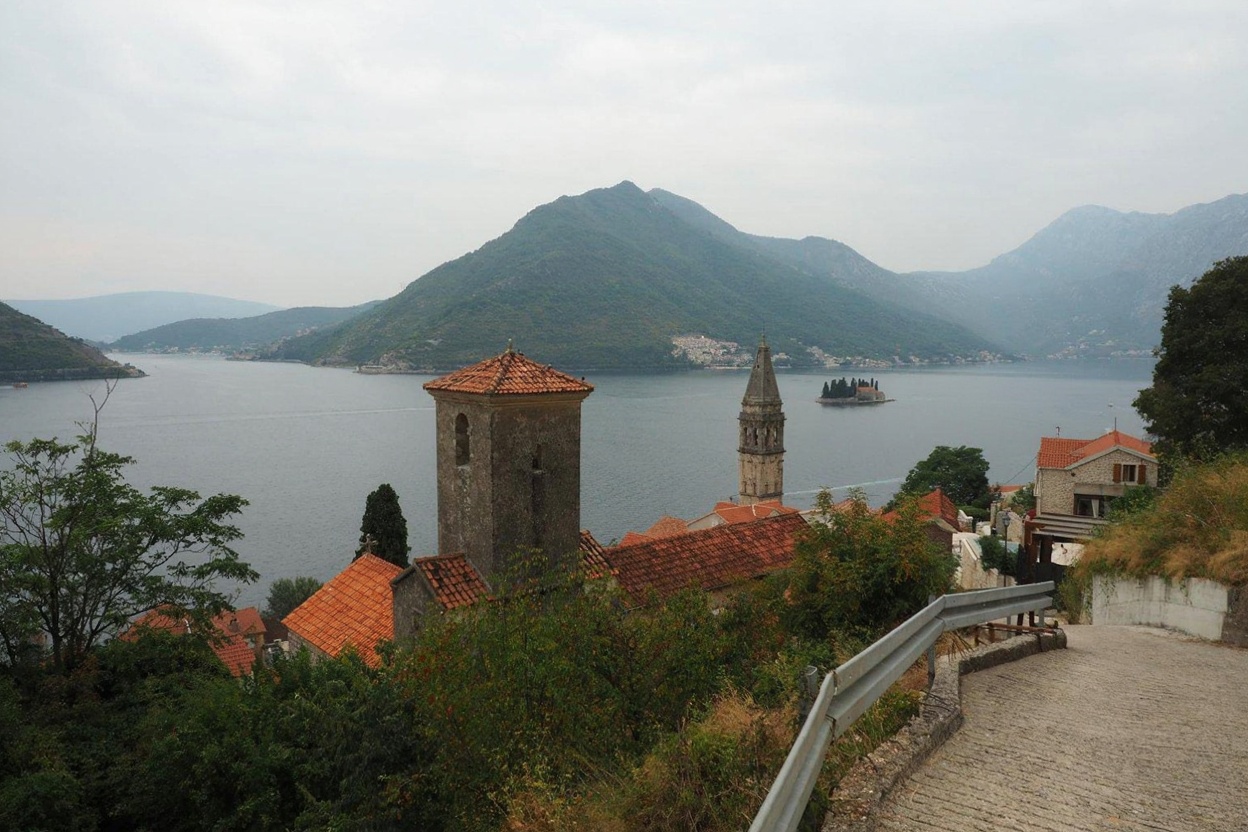
Buses: The main bus routes connect Kotor, Budva, Herceg Novi, Bar, Ulcinj, Podgorica, and Žabljak. Prices are reasonable: Kotor to Podgorica: €7–10 one way. Podgorica to Žabljak (for Durmitor): €8–12. The buses run on time but not always frequently — check timetables before building your itinerary around them.
Car rental: From €15–20/day for a basic saloon from local operators, €25–35 from international chains. For the Bay of Kotor circuit, Durmitor, or the coast to Albania, a hire car makes the trip substantially easier and is shared cost if you’re travelling with someone. The roads are generally good; mountain roads require attention.
The Verige ferry: The car ferry across the narrowest point of the Bay of Kotor — between Lepetane and Kamenari — costs €5 per car and saves an hour of coastal road driving. Take it.
Taxis: Regulated taxis in Kotor and Budva: €0.70–0.90/km. Always check the meter is running. Airport transfers (Tivat Airport to Kotor): €15–20 legitimate price. Tourist tax: €1/person/day.
Walking: Kotor Old Town is compact — everything inside the walls is walkable. The fortress hike above the old town is free and takes 45 minutes up. Don’t hire a guide for this — just follow the walls.
Paid Attractions
Most of Montenegro’s best things cost very little or nothing. The beaches are free. The hiking is free. The driving is scenery.
Kotor Old Town entrance: €3/person. This is the wall entrance fee — you pay it at the entrance to the fortification hike, not to the town itself. Walking around the old town streets is free.
Kotor fortress hike: included in the €3 wall entrance. The view at the top is the reason to come to Kotor. Go before 9am or after 4pm.
Ostrog Monastery (the cave monastery): free. One of the most extraordinary religious sites in the Balkans, carved directly into a cliff face. The road up is dramatic. No charge.
Durmitor National Park: park entry costs €3–5/day depending on season. The Tara Canyon boat trip: €15–25 per person. The Black Lake hike (the main one): free within the park.
Cetinje (the old royal capital): free to walk around. The museums charge €2–4 each. Worth a half-day trip from Kotor — 45 minutes on the spectacular mountain road via Lovćen.
Boat trips: Kotor and Perast offer daily boat trips around the bay, including Our Lady of the Rocks (the island church). Basic boat tour: €12–18/person. Negotiate for private hire: €50–80 for a boat for 2 hours.
Sample Daily Budgets
Hostel dorm €14 · Bakery breakfast €2 · Local lunch €8 · Konoba dinner €14 · Coffee ×2 €3 · Bus/walking €2 · Tourist tax €1 · Water/snacks €2
Guesthouse private room shared €35 · Meals (sit-down throughout) €30 · Car hire shared €12 · Activities/entrance fees €8 · Drinks/coffee €7 · Tourist tax €1 · Misc €2
Guesthouse with dinner + breakfast €40 · Park entry €4 · Coffee + snacks €4 · Taxi or shared transport €3 · Tourist tax €1
Seasonal Price Differences
This is the most important section for budget planning.
July–August (peak): Accommodation on the coast costs 40–80% more than shoulder season. Budva and Kotor are the most affected. Restaurant prices don’t change dramatically, but table availability does — book dinner in Kotor Old Town for July, otherwise you’re eating at 10pm.
April–June and September–October (shoulder): The sweet spots. Weather is warm enough to swim (from late May), crowds are manageable, and accommodation prices are at their most competitive. September is the month I’d send anyone to Kotor — the light is good, the tour groups have reduced, and the water is still warm from summer.
November–March (off-season): The coast is quiet to the point of feeling abandoned. Many restaurants and guesthouses close. Kotor itself stays open (locals live there year-round) and is genuinely beautiful in winter light. Accommodation prices are low — €25–40 for private rooms. For Durmitor in winter: snow from December, excellent if you ski, inaccessible in heavy snow without a 4WD.
Money Practicalities
Currency: Montenegro uses the euro despite not being in the EU. This simplifies things for European visitors considerably.
ATMs: Available in all major towns. The coastal towns have good ATM coverage. In more rural areas — the road to Plav, parts of Durmitor — plan ahead and carry cash.
Cards: Accepted at hotels, most restaurants, and shops in tourist areas. Local konobas, bus stations, and markets: cash preferred. Always have €20–30 in small notes.
Cost of living context: I pay €650/month rent for a flat outside Kotor. A coffee at my local café is €1.20. A bottle of local Vranac from the Vinpak cooperative: €4–5. Montenegro’s cost of living for residents is modest. Tourist prices in the premium spots are higher but still below Western European equivalents.
Tipping: not expected at local konobas. At tourist-facing restaurants where service is attentive, 10% is fine. Round up taxi fares. Boat tour operators appreciate €5–10 if the trip was genuinely good.
Best Value Experiences in Montenegro
Not everything in Montenegro is priced the same way. Some things are extraordinary value; others are straightforward tourist tax. Here’s where the money is genuinely well spent.
The Verige ferry crossing (€5/car). This is one of the best €5 you’ll spend anywhere in the Balkans. The car ferry crosses the narrowest point of the Bay of Kotor — a two-minute journey — and saves you an hour of coastal road driving around the bay. The views from the boat at dawn or late afternoon are worth the crossing alone. Every time I take visitors from Kotor to Herceg Novi, we take the ferry. Nobody regrets it.
Ostrog Monastery (free). This should not be free. A monastery carved directly into a white cliff face at 900 metres, active since the 17th century, with the preserved relics of Vasilije of Ostrog in a room hacked out of the rock. The road up is genuinely vertiginous — the final kilometre is a single-track switchback that most coaches can’t manage. Go by car, park at the lower monastery, walk the last stretch. No charge. One of the three or four most extraordinary religious sites I’ve seen in Europe, and Montenegro gives it away.
The Kotor fortress hike (€3). This is the €3 entrance fee that covers the full circuit of the fortification walls. The hike to the top takes 45 minutes from the old town, gains about 260 metres in altitude, and ends at Saint John’s Fortress with a view over the Bay of Kotor that justifies the entire journey to Montenegro. Go before 9am to avoid the midday heat and the tour groups arriving from Dubrovnik. In September, go at 6:30am for the light.
Cooking a meal from the Kotor market (€8–12). The produce market just outside the old town sells fresh fish landed that morning from the bay, local vegetables, and Montenegrin cheese. Buy a sea bass, some tomatoes, and a bottle of Vranac from the market wine stall (€3–4). If your accommodation has a kitchen, you’ve had the best meal of your Montenegro trip for €10. The fish market section opens around 7am and is worth seeing regardless of whether you buy anything.
Durmitor day trip with the National Park pass (€3–5). The Tara Canyon is the deepest canyon in Europe and the second deepest in the world after the Grand Canyon. You can see it properly — all of it, from the canyon road above Žabljak — for the cost of the national park day pass. The overlook above the canyon is a 30-minute walk from where the road ends. No guided tour required. The paid canyon rafting (€25–40) is a good day out if you want it, but seeing the canyon itself costs nothing beyond the park entry.
What Catches Tourists Out
Montenegro’s tourist economy has a few reliable mechanisms for extracting money from visitors who haven’t done their research. Here’s where the waste typically happens.
Airport transfers at unofficial rates. Tivat Airport is Montenegro’s main gateway. The taxi rank outside arrivals quotes €25–30 to Kotor. The correct fare with a metered taxi is €15–20. Walk past the first rank of waiting drivers who approach you inside the terminal, go to the official taxi rank outside, and confirm the meter is running. Alternatively, agree a fixed price before getting in — €18 to Kotor is reasonable from Tivat. The Podgorica Airport to Kotor transfer is longer (about 90 minutes) and legitimately costs €45–60 by private transfer; the bus from Podgorica station to Kotor is €7–10 and entirely manageable with luggage.
Tourist menus versus local menus. Restaurants on the Kotor Old Town main square and the Budva seafront operate two effectively different menus: the printed menu placed in front of tourists, and the prices that Montenegrins who live near those restaurants actually pay. The geographic rule is simple: walk two streets back from the water. Specifically in Kotor: the restaurants on the road to Prcanj, away from the old town gate, serve grilled sea bass at €10–12. On the tourist strip: €18–24. The fish is from the same bay.
The tourist tax surprise. I’ve seen this catch out more experienced travellers than beginners. Montenegro’s €1/person/day tourist tax is mandatory, but private apartment rentals booked directly with owners — rather than through Booking.com or Airbnb — frequently don’t include it in the quoted price. You pay separately in cash on arrival. For a week-long stay with two people, that’s €14 you haven’t budgeted. It’s not a scam; it’s a government levy. Just confirm before you book.
Peak season accommodation in Budva. Budva’s reputation for being Montenegro’s party coast brings prices with it in July and August. An apartment that rents for €60/night in June or September costs €100–120 in the first three weeks of August. This is not price gouging — it’s supply and demand in a small town with a finite number of beds. If you’re going to Budva, the financial argument for going in September is substantial: same sea temperature (warmer, in fact, than early summer), 30–40% lower accommodation prices, and no queues for the town beach.
Guided hikes where guides are unnecessary. Several walking routes in Montenegro are marketed with hired guides. The Kotor fortress walk needs no guide — the path follows the walls and there are direction signs. The hike from Žabljak to the Black Lake in Durmitor is a 3.6km marked trail with no navigation challenges. Save the guide budget for routes that genuinely require local knowledge: the high-altitude trails in Prokletije, the off-trail routes in northern Durmitor, or a fishing boat trip with a local captain who knows the bay.
Budget by Trip Length — Worked Examples
Abstract daily numbers are useful; actual trip costs are more useful. Here’s what Montenegro trips realistically cost for different lengths, at the budget and mid-range level.
5 days: Kotor + Budva (shoulder season, budget)
Hostel Kotor 3 nights €42 · Hostel Budva 2 nights €28 · Bus Kotor→Budva €4 · Food 5 days @€14/day €70 · Fortress hike €3 · Verige ferry (car rental 1 day shared) €12 · Coffee/drinks €15 · Tourist tax €5 · Misc €15. Excludes flights and international transport.
Guesthouse private room 5 nights @€55 €275 · Car hire 2 days @€20 €40 · Food 5 days @€25/day €125 · Activities (boat trip, fortress) €25 · Tourist tax €5 · Misc €20.
7 days: Kotor + Durmitor + Podgorica (mid-range, two sharing)
Kotor guesthouse 3 nights split €90 · Žabljak guesthouse (dinner+breakfast) 2 nights split €80 · Podgorica hotel 2 nights split €70 · Car hire 7 days split €70 · Petrol €15 · Food (cities) 5 days @€18 €90 · Activities €40 · Tourist tax €7 · Misc €30.
Hostel dorms all nights @€13 average €91 · Bus Kotor→Podgorica→Žabljak €22 · Food 7 days @€14 €98 · Activities €25 · Tourist tax €7 · Misc €25. Note: reaching Durmitor by bus requires patience with timetables.
10 days: Coast + mountains + Albania border crossing
A 10-day route that covers Kotor, Budva, Ulcinj (the southernmost coastal town, significantly cheaper than Budva), Žabljak for Durmitor, and a crossing into northern Albania via the Shkodër route costs approximately €420–480 for a budget traveller with a hire car split between two, or €500–580 mid-range. The Albanian leke section lowers daily costs considerably — accommodation in Shkodër runs €20–30 for a private room.
How Montenegro Compares: Cost vs Other Destinations
Context helps. Here’s how Montenegro sits against the destinations people typically compare it with, on the same metrics.
Montenegro sits comfortably between Albania (cheaper, less developed) and Croatia (more expensive, better infrastructure). The mountain areas (Žabljak, Durmitor) are the cheapest in the country — comparable to Albania coast for accommodation, with Montenegrin food quality.
Ten Ways to Cut the Montenegro Budget Without Cutting the Experience
These are the specific moves that keep costs down without removing anything worth keeping.
1. Take the Verige ferry instead of the coast road. The €5 car ferry across the Bay of Kotor saves an hour of driving and therefore fuel, time, and the general stress of the August coastal road. It’s both cheaper and better.
2. Eat at bakeries for breakfast, every day. Burek and coffee: €2–3. The same calories from a hotel breakfast: €8–12. Over a week: saves €35–63 per person. The bakery version is also better.
3. Stay in Dobrota or Prcanj, not Kotor Old Town. The villages immediately north of Kotor — 10–15 minutes on foot — offer private rooms at €30–45 versus €55–80 inside the walls. Same bay view, same distance from everything, no noise from the bars.
4. Buy wine from the Voli supermarket. Plantaže Vranac at Voli: €4–5 per bottle. The same wine on a restaurant terrace: €18–25 per bottle. For a self-catering evening with a bay view, the supermarket version is entirely rational.
5. Check the cruise ship schedule before booking restaurant tables. Restaurants in Kotor Old Town charge the same prices on cruise ship days as on quiet days, but they’re under maximum pressure and quality suffers. A Tuesday in September, on the other hand, is a genuinely different experience at the same price. The Port of Kotor publishes ship arrivals online.
6. Book Durmitor accommodation directly with guesthouses, not through aggregators. Small Žabljak guesthouses charge €25–40/night booked direct. On Booking.com: €35–55 for the same room. Email the guesthouse or call the number on their website. The owners prefer it and sometimes offer dinner-included rates not listed on the platforms.
7. Use the local bus between coastal towns. Kotor to Budva by local bus: €2.50. Kotor to Budva by taxi: €25–35. The bus takes 40 minutes, runs every 30–60 minutes, and goes from the Kotor bus station to the Budva bus station. For a group of four, still take a taxi (the maths are similar). For one or two people, bus.
8. Hike the Kotor fortress before 8am — it’s free. The €8 entrance fee applies from 8am. The gates are open before 8am and the fortress walk is free. The 6:30am version is also objectively better — the light, the quiet, the absence of a hundred people on the same narrow stone path.
9. Eat the same food in Perast that you’d eat in Kotor, for less. The buzara (mussels) at a Perast waterfront restaurant: €9–11. The same buzara in Kotor tourist terrace: €13–16. Perast is 12km away and has no cruise ships. The fish came from the same bay.
10. Visit Ostrog Monastery independently. Some tour operators charge €30–40 for a Kotor-to-Ostrog excursion. The monastery is free to enter. A hire car from Kotor gets you there in 75 minutes on a road you’ll remember for the views. The cost: the car hire you probably already have. Don’t pay for a guided tour to a free attraction on a public road.
Digital Nomad Budget — One Month in Montenegro
Montenegro is not the obvious digital nomad choice — it lacks the infrastructure of, say, Lisbon or Tbilisi — but it’s increasingly viable for a month-long stay, particularly in Kotor or Podgorica. Here’s what a realistic month actually costs.
Accommodation: A furnished one-bedroom apartment outside Kotor’s old town (10–15 minutes’ walk, which is the correct distance to be — close enough, far enough from the tourist noise): €500–700/month. In Podgorica: €400–550/month for equivalent. Short-term furnished rentals through local agents or Facebook groups often undercut Airbnb significantly. My flat outside the walls costs €650/month — that’s a normal resident price, not a tourist rate.
Food: Cooking your own food from Voli supermarket: €200–280/month for a comfortable diet including local wine and good ingredients. Eating out at local konobas 4–5 times a week and cooking the rest: add €100–150. A full month of eating out at local (not tourist) prices: €350–450.
Coworking: Podgorica has two functional coworking spaces — Work.ba and Nest Coworking — at €100–150/month for a hot desk. Kotor has limited coworking; most nomads work from café terraces or their apartments. The internet infrastructure in Kotor old town is reasonable but not exceptional — get a local Telenor SIM with a data plan (€15–20/month for 30GB) as backup.
Transport within Montenegro: Without a car, monthly transport costs (local buses, occasional taxi, the Verige ferry when needed) run €30–60. With a car: factor €300–400/month all-in for local operator hire over 30 days, or €150–200 if you negotiate a longer-term rate with a Kotor rental company directly.
Total monthly estimate:
Apartment €600 · Food (mix of cooking and eating out) €350 · Transport (no car, occasional taxi) €50 · SIM/internet €20 · Coworking (café-based) €30 · Activities and sundry €100–300. Significantly cheaper than Dubrovnik (equivalent lifestyle: €2,500+/month) or anywhere on the Italian Adriatic coast.
Apartment €480 · Food (cooking mostly) €280 · Transport (car useful but bus network functional) €60 · Coworking €130 · SIM €15 · Sundry €100. Podgorica is cheaper than Kotor but less scenic. The trade-off is real.
- How much does Montenegro cost per day in 2026?
- Budget travellers can manage €40–55/day: hostel dorms (€7–18), local restaurant meals (€8–14), buses, and free beaches. Mid-range independent travel — private rooms, sit-down restaurants, occasional hired car — runs €80–120/day. The coast (Kotor, Budva) is the expensive end; Podgorica and the mountains are noticeably cheaper. Peak season (July–August) adds 30–50% to accommodation costs on the coast.
- Is Montenegro expensive compared to Croatia?
- No — Montenegro is consistently cheaper than Croatia, particularly Dubrovnik. A restaurant meal in Kotor costs 30–40% less than an equivalent meal in Dubrovnik Old Town. Accommodation is also cheaper: a private room in Kotor that costs €50–60 in peak season would cost €80–120 in Dubrovnik. The main Montenegrin tourist sites (Kotor walls, Ostrog Monastery) charge far less than comparable Croatian attractions.
- What is the cheapest time to visit Montenegro?
- November to March is cheapest — accommodation prices at their lowest, almost no crowds. But the coast is very quiet (many businesses close) and Durmitor can be snow-blocked. For the best combination of good weather, low prices, and manageable crowds: April to June or September to October. September is particularly good — summer warmth without summer prices or crowds.
- How much does accommodation cost in Kotor?
- Inside the Old Town walls: premium pricing. Private rooms in guesthouses: €55–80 in peak season, €35–50 in shoulder season. Hostel dorms: €15–18 peak, €10–14 shoulder. Just outside the walls (15–20 minute walk): prices drop 20–30%. The village of Muo across the bay from Kotor offers guesthouses at lower prices with boat-accessible proximity to the town.
- Do I need a car in Montenegro?
- It depends on your itinerary. For Kotor Old Town and Budva: not essential — buses connect the main coastal towns. For Durmitor, Žabljak, and the northern mountains: buses run but infrequently, and a car gives you access to the roads that make Montenegro extraordinary. Car hire from €15–20/day. The Verige ferry (€5/car) across the Bay of Kotor saves an hour on the coastal circuit and is worth it.
- What is the tourist tax in Montenegro?
- €1 per person per day. It’s a mandatory government levy applied to all tourist accommodation. Hotels and official guesthouses include it in the price. Private apartment rentals booked directly with owners often don’t — confirm when you book and budget for it separately. It’s not large but it adds up over a week: €7/person for a 7-night stay.