Last updated: June 2026 — prices and opening times verified June 2026.
Three cruise ships arrived the morning I moved into Kotor Old Town. By 9am, the main square was impassable. By noon, the walls walk had a queue at the southern gate. By 3pm, the boats were full. By 5pm, the ships were gone and the old town was mine.
That’s Kotor in summer. The trick is being there for the 5pm version.
Walk the City Walls — But Do It Right
The Kotor City Walls are the main event. They climb from the Old Town up to the San Giovanni Fortress at 280 metres above sea level — 1,350 steps in total, roughly 30 to 40 minutes up at a steady pace.
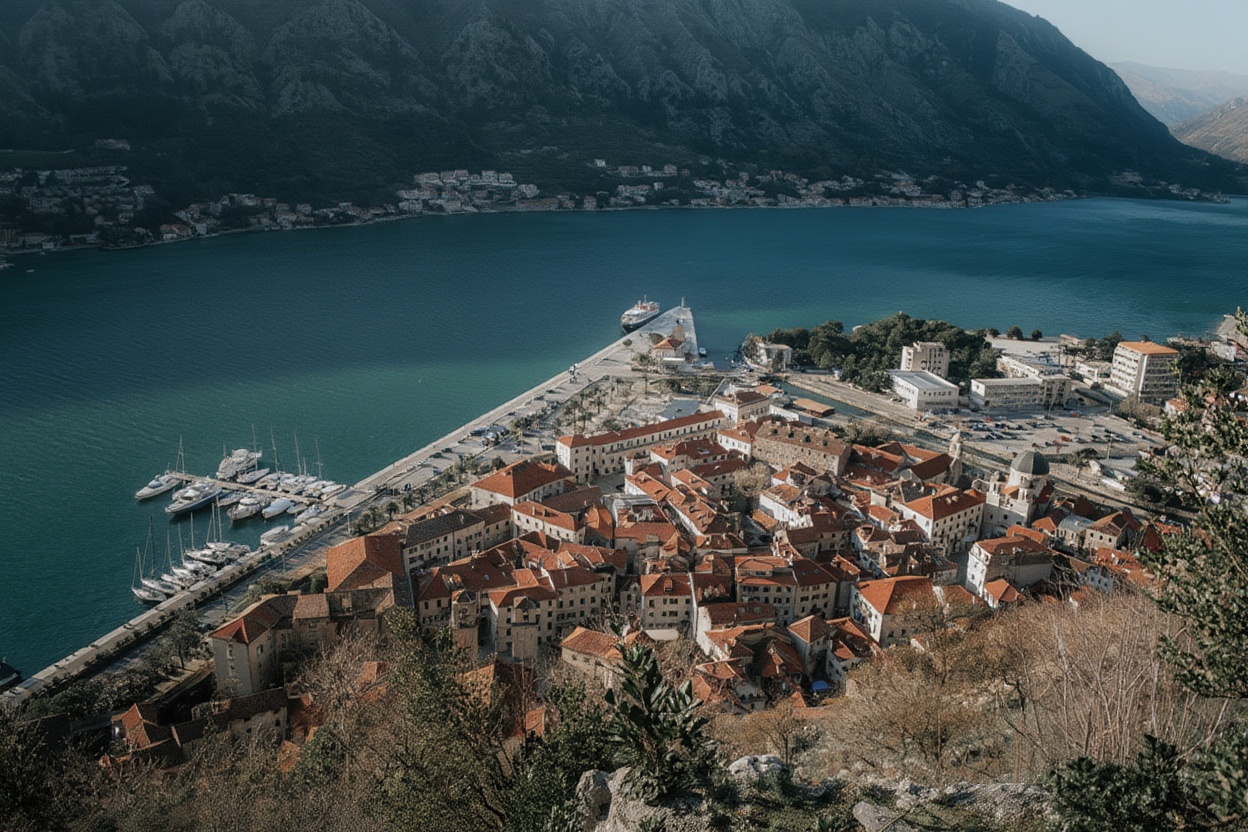
Entry fee: €8 (~£6.80 / ~$8.70) during opening hours of 8am to 8pm. Before 8am and after 8pm, the gates are open and free.
Do it at dawn. I mean this specifically. Get up at 6am, go to the main gate, start walking when it’s still cool and still quiet. The view from the top changes across the day — the Bay of Kotor at 6:30am before the mist clears is genuinely one of the better things I’ve seen in Montenegro — and you avoid both the heat (a serious factor in July and August) and the cruise ship crowds that arrive mid-morning and fill the path.
The path winds through the medieval walls, past a small church (Our Lady of Health) about halfway up, and ends at the ruined San Giovanni Fortress at the top. The view over the Bay of Kotor, the Old Town below, and the mountains behind is the reason people make the climb. It earns it.
•TOM’S PICK
The route down offers a variation: when you reach the area below the church, look for the path marked “barutni magazin” (old gunpowder magazine). This takes you out through a different gate from the one you entered, which means you see more of the fortification structure and avoid doubling back on the same crowds. Quieter and more interesting than the main route back.
Kotor Old Town (Stari Grad) — At the Right Time
Kotor Old Town is genuinely beautiful. Compact medieval lanes, Venetian Gothic architecture, a main square with a clock tower, cats doing whatever cats do on warm stone. You need it at the right time.
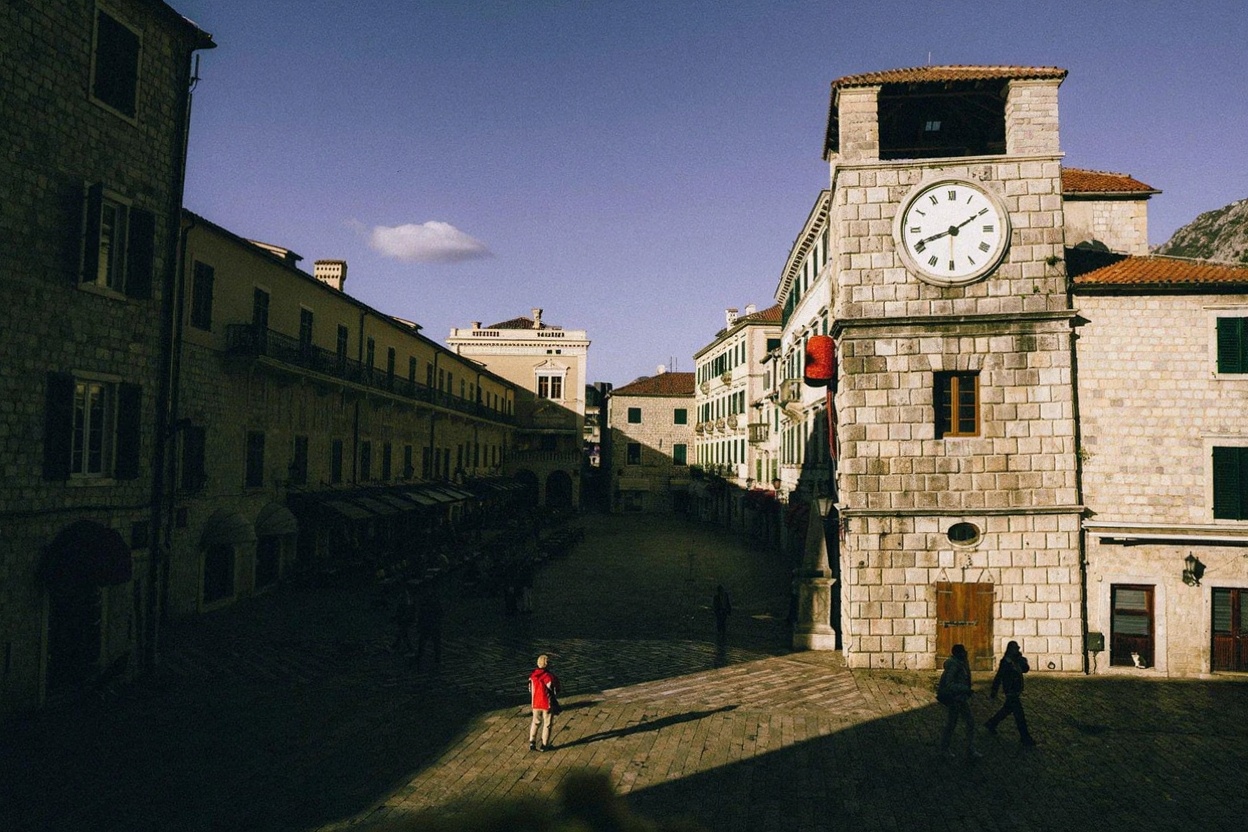
The right time is early. Before 9am in summer (before cruise ships arrive), the Old Town operates as a real neighbourhood — people buying bread, café owners setting up chairs, the specific quiet of old stone at morning temperature. This is what the Instagram photos look like. The reality by 11am is a different matter entirely.
The Old Town is small — you can walk every lane in 45 minutes. The main points of interest:
Trg od Oružja (Arms Square) — the main square, with the Clock Tower (1602) and a central pillar used historically for public punishments. Worth ten minutes. The tower is not climbable.
The Cats — Kotor has had a long relationship with cats since the Venetian period, when sailors kept them on ships for pest control and they settled in the city. There is a small cat museum on one of the lanes (entry €1 — yes, genuinely one euro). The cats themselves are throughout the old town and are essentially semi-municipal. Do not over-romanticise this but also do not pretend it’s not charming.
St Tryphon Cathedral — the Romanesque cathedral at the heart of the old town, built in 1166. Entry around €3. Well-preserved interior with medieval reliefs. Worth seeing if you have interest in religious architecture.
The Old Town Market — Saturday mornings are the most active, with local vendors selling produce, honey, olive oil, and various Montenegrin specialities. Come with cash, buy some prosciutto and local cheese, eat it in the square. This is the instruction.
Perast and Our Lady of the Rocks
Perast is the small town 12km northwest of Kotor along the bay, with two small islands sitting just offshore. One of them has a church built on an artificial island that Perast fishermen created over centuries by dropping stones from their boats whenever they passed. Our Lady of the Rocks is one of the better stories in Montenegrin history, and the church itself has several hundred ex-votos — small paintings commissioned by sailors who survived catastrophes at sea.
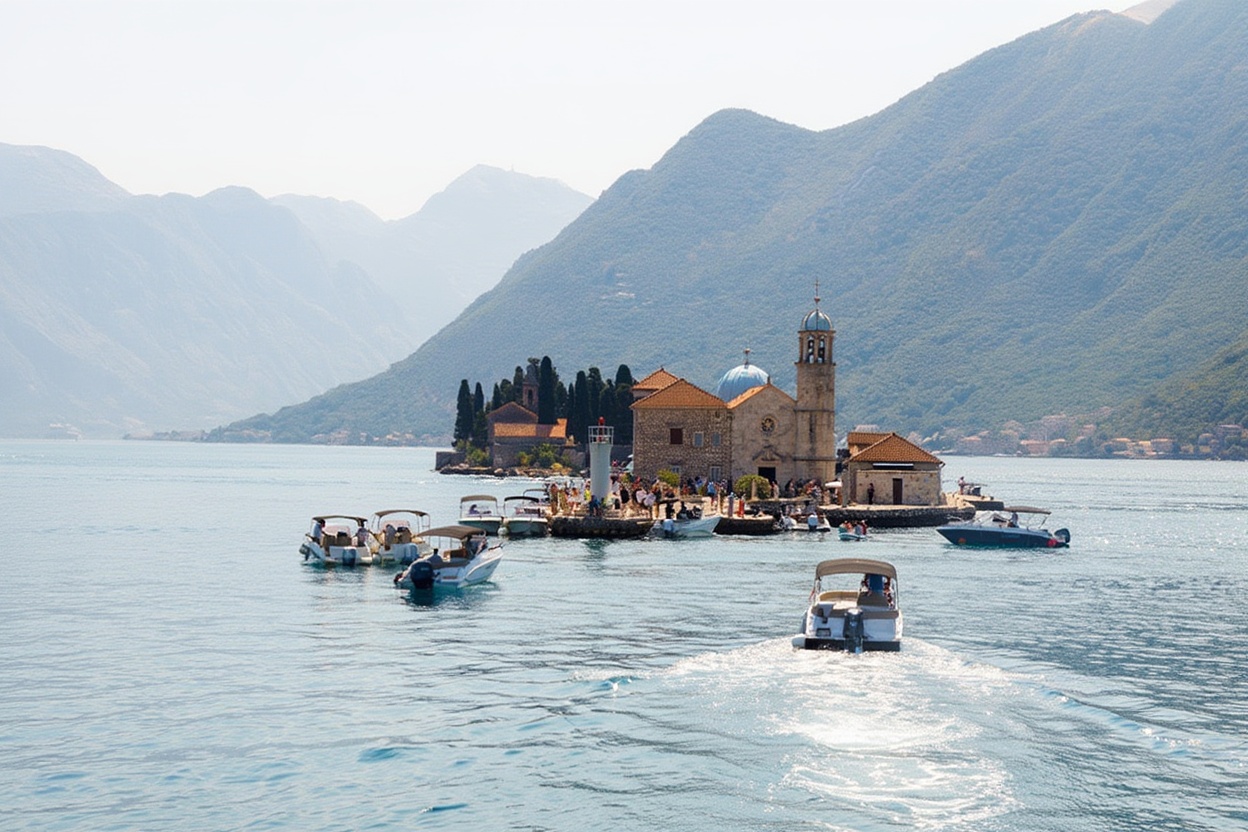
Getting there from Kotor: Blue Line bus, departs from near the north gate of the old town, costs 1.50 EUR (~£1.28 / ~$1.63), journey around 30 minutes, roughly every two hours (less frequent on Sundays).
Boat to the island from Perast: small wooden boats charge 5–10 EUR per person for the crossing. Negotiate if there’s a group of you — most drivers will take a group for 20–25 EUR total. The island has the church, some cats, and a view back at Perast that makes the crossing immediately worthwhile.
Spend the afternoon in Perast itself — it’s quieter than Kotor, the bay view is excellent, and there are a few good restaurants where you can eat fresh fish and watch the water.
⚠Real Talk
Perast is sometimes described as “Croatia at half the price.” This is accurate for accommodation and restaurants. It’s also genuinely beautiful on its own terms — don’t treat it as a value version of somewhere else.
The Bay of Kotor Boat Tour
The Bay of Kotor is more interesting from the water than from the road, and a half-day boat tour covers places that are difficult or impossible to reach on foot or by bus.
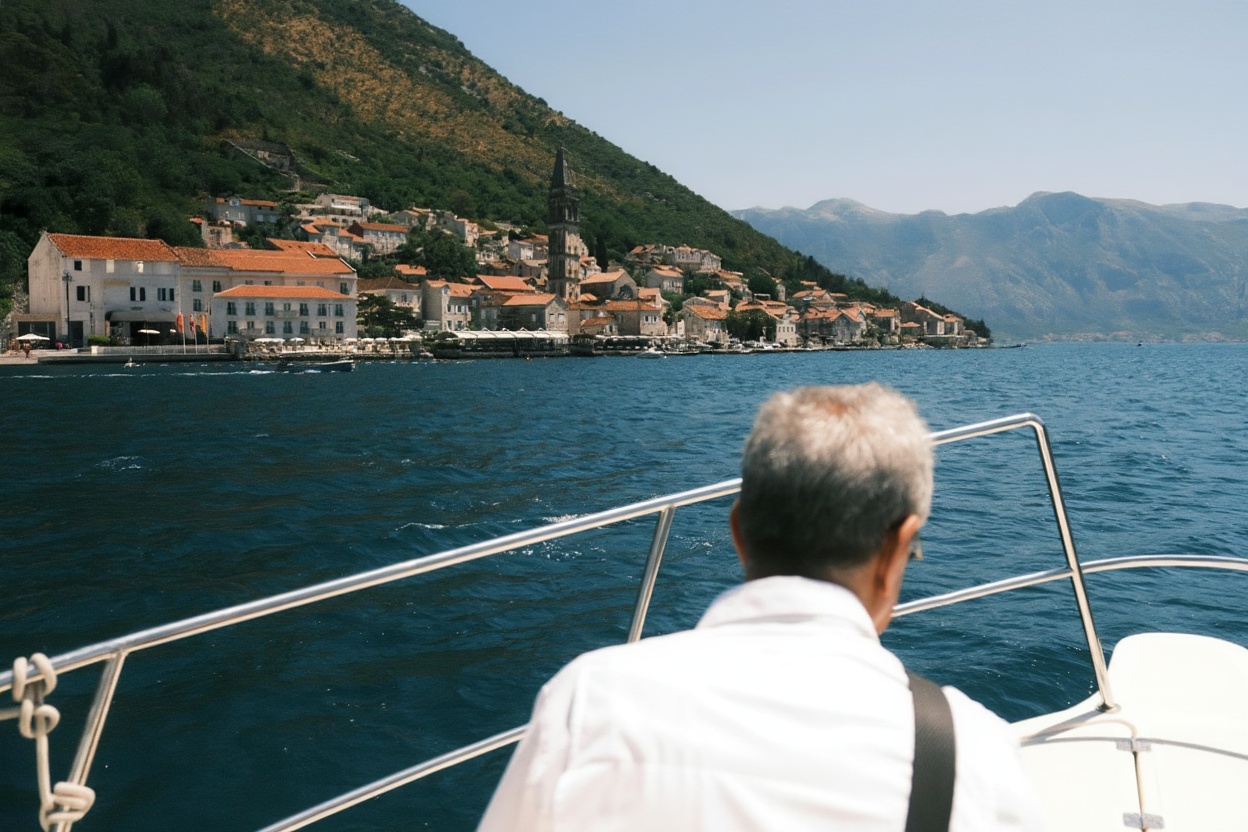
Standard tours from Kotor cover: the Blue Cave (a sea cave accessible only by water, best seen in morning light), Our Lady of the Rocks, Perast, and a swimming stop somewhere in the bay. Prices range from roughly €40–60 per person for group tours to €200–300 for a private boat for the day.
The group tours leave from the Kotor Old Town waterfront, usually around 9am. Book in advance in summer — they sell out. Walk along the waterfront and you’ll find five or six operators offering similar routes at similar prices. Compare departure times and swimming stop quality rather than price, which varies by about €5–10 either way.
Kotor Cable Car (New in 2025)
A cable car opened on the Vrmac Peninsula in 2025, offering an aerial perspective on the Bay of Kotor from the quiet south side. It’s newer than most guides cover and significantly less crowded than the city walls walk, because most visitors don’t know it exists yet.
Access requires a car or taxi to the base station — it’s not walkable from the Old Town. Worth it on a clear day for the view and the novelty of seeing the bay from the Vrmac side rather than the Lovćen side. Check current opening status and prices locally — new infrastructure in Montenegro often has irregular early operating hours.
Škurda Canyon
Behind the Old Town, following the Škurda river canyon upstream, is a short hike that most visitors miss entirely because they don’t know it’s there.
The canyon starts at the north gate of the Old Town and follows a path up the river gorge through old mill ruins and rock formations. It takes about an hour for the basic route, longer if you push further upstream. It’s cool, shaded, and almost entirely free of tourists.
Go in the morning when the sun isn’t directly overhead. Wear shoes you’re prepared to get wet — the path crosses the stream several times. No entry fee. No crowds.
Where to Eat in Kotor
Restaurants inside the Old Town are overwhelmingly oriented toward cruise ship tourists: reasonable quality, high prices, English menus with photos.
Better options are outside the walls or along the bay.
Konoba Scala Santa — on the steps below the walls on the south side of the Old Town. Terrace with views, traditional Montenegrin food (ćevapi, pljeskavica, fresh fish), prices substantially below what you’d pay inside the walls. Usually full by 7pm — arrive before then or book. [VERIFY: still operating June 2026]
Dobrota — the small town just north of Kotor Old Town (10 min walk or €5 taxi) has local restaurants serving the bay promenade with less tourist markup. This is where I eat when I’m not cooking at home.
Ljuta’s Oyster Farm — on the northern bay, accessible by car, a working oyster farm that does tastings. The mussels and oysters are pulled from the water of the bay that morning. This is the kind of specific, non-obvious eating experience that Kotor doesn’t get enough credit for.
Where to Stay in Kotor
The most asked question is whether to stay inside the Old Town walls or outside.
Inside the Old Town: atmospheric, central, no cars. Also: noisy until late, cramped rooms in converted medieval buildings, higher prices for lower quality than the surrounding area. If atmosphere is what you’re after, one or two nights inside the walls is worth the premium. For a longer stay, the novelty wears off and the noise becomes a problem.
Outside — specifically in Dobrota, 1km north along the bay — you get better value, bay views from your terrace, and you’re ten minutes’ walk from the Old Town. This is where I live and what I recommend for stays of three or more nights.
My Mistake in Kotor
When I first arrived in Kotor, I did the walls walk at 11am in July. I am an architect — I understand how stone conducts heat. I know better.
It was 38°C on the upper section of the walls. The path is exposed. There is no shade between Our Lady of Health (halfway up) and the fortress. There were people turning back. I continued out of stubbornness and arrived at the top dehydrated, sweating through my shirt, and too tired to properly enjoy the view I’d come for.
Do it at dawn. I cannot tell you this enough times.
Getting to Kotor: The Practical Bit
Kotor’s airport (Tivat) is 25km away — one of the closest airport-to-city ratios in the Adriatic. Here are the options from the most common arrival points.
From Tivat Airport: 25km, 25–35 minutes by taxi. Legitimate fare: €15–20. Use the official taxi rank outside arrivals; don’t accept offers from men inside the terminal. The airport bus exists in theory; in practice, a taxi split between two or three people is the same cost and takes half the time.
From Podgorica Airport or Bus Station: Buses run throughout the day, approximately every 1–2 hours, fare €7–10, journey 1.5–2 hours. The Podgorica–Kotor route is one of the best scenic bus journeys in Montenegro — the road crosses the Lovćen massif and drops into the Bay of Kotor from above. Buy at the Podgorica bus station or board and pay the driver.
From Dubrovnik (Croatia): 83km, approximately 1h45m–2h30m by car or taxi depending on the border crossing wait. The border at Debeli Brijeg adds 15–90 minutes in summer. Direct buses exist from Dubrovnik bus station (€15–20, 2.5–3 hours including border). No direct bus route exists — it’s the long-distance service to Podgorica/Bar that stops in Kotor. Book online or at the Dubrovnik bus station in advance for July–August.
From Herceg Novi: Take the Verige ferry from Kamenari to Lepetane (€5/car, 4 minutes, runs 24 hours, every 15–30 minutes) rather than driving the bay road. Total Herceg Novi to Kotor via ferry: 25 minutes. The bay road alternative: 60–90 minutes. There is no sensible reason to take the bay road when the ferry is running.
Driving and parking in Kotor: The old town is car-free. The main parking area is on the waterfront east of the Sea Gate — €2/hour, fills early in summer. Free parking exists 500 metres north along the bay road toward Dobrota. There’s also a car park on the south side by the River Gate. Don’t park on the main road; clamping operates in summer.
Kotor by Season: When to Go and What Changes
May and June: The optimal window. Water temperature reaches 22°C by late May — swimmable. The Bay of Kotor in early June, with the Lovćen peaks still holding patches of late snow and the tourist season not yet in full effect, is as good as this coast gets. Fortress walk before 8am with almost no one else on the path. Restaurants choosing their own pace rather than cruise ship turnover. Book accommodation 2–3 weeks ahead.
July and August: Peak season. Up to 10+ cruise ships per week; the busiest days bring 4,000–6,000 additional visitors between 9am and 5pm. The walls walk at 11am in August is 38°C with 200 people on it. The walls walk at 6:30am in August is extraordinary. The town doesn’t become bad — it becomes logistically demanding. Plan around the times, not against them.
September and October: Tom’s recommendation for most people. Sea temperature at its warmest (24–25°C from the accumulated summer heat). Crowds at 50% of August peak. The light shifts — lower angle, more golden, better for photography. The cruise ship schedule continues in September but reduces in October. Restaurant kitchens making fewer covers, more carefully. October: beginning of the mists on the bay in morning, extraordinary for the walls walk at dawn.
November to March: Kotor off-season. Most beach restaurants and tour operators close. What remains: the town itself, residents, the cats, the market on Saturday mornings, and a quiet that the summer version cannot achieve. The bay in January fog, with the fortification walls rising through the mist, is one of the more unusual images in the western Balkans. Accommodation prices halve. Some guesthouses close entirely — check in advance.
What to Skip in Kotor (Tom’s Honest List)
Most Kotor guides are written by people who spent two days here in August and found everything wonderful. I’ve lived in Montenegro long enough to have opinions about what’s not worth your time.
The Maritime Museum: €4, collection of ship models and nautical charts, poorly labelled in English. Worth it only if you have a specific interest in Venetian naval history. Otherwise, skip.
Eating inside the Old Town on a summer evening: The restaurants on the main square and in the central lanes are almost uniformly overpriced for what they serve. The food isn’t bad — it’s just not worth the 40% premium you pay for the location. Eat in Dobrota instead, where the same food costs less and the bay view is better.
The “secret beach” routes on social media: There are several routes shared online as “secret beaches near Kotor.” Most involve a significant walk in heat over rough terrain to reach a beach that isn’t secret because everyone’s looking at the same Instagram posts. If you want a beach, drive to Budva (30km) or the Riviera Montenegro beaches at Petrovac. They’re better and require no navigational adventure.
Group boat tours on a cloudy day: The bay is best in clear morning light. A €50 boat tour in flat grey light is a much diminished version of the experience. Check the forecast. If it’s overcast, spend the money on a better dinner instead and do the walls walk, which works in all conditions.
Side Trips from Kotor
Two nights in Kotor, then a car for the wider region. These are worth adding if you have time.
Budva (30km south, 35 minutes): Montenegro’s main beach resort — more developed, more crowded, more nightlife. Budva Old Town is smaller and less impressive than Kotor but the beach infrastructure is better. Worth a half-day. See the Budva guide for specifics.
Sveti Stefan (37km south, 45 minutes): The iconic island hotel on a causeway — you can walk to the causeway viewpoint for free even if the island itself is gated off for resort guests. The view is one of the most photographed in the Adriatic and worth a 20-minute stop en route to Budva. See the Sveti Stefan guide.
Lovćen National Park (28km, 45 minutes): The mountain above Kotor — dramatic switchbacks up the road from Kotor bring you to Lovćen, with the Njegoš Mausoleum at the top (461 steps from the car park, views to the Adriatic and into Montenegro’s interior). Best in morning before afternoon cloud builds. A car is required.
- How many days do you need in Kotor?
- Two nights is the working answer. Day one: city walls at dawn, Old Town before cruise ships arrive, afternoon rest. Day two: Perast and Our Lady of the Rocks by bus, bay boat tour, evening back in Kotor. Add a third night if you want to explore further — Budva, the Vrmac cable car, or simply use Kotor as a base for driving the wider bay.
- Is Kotor worth visiting?
- Yes, with realistic expectations. Kotor is a genuine medieval walled city with an excellent fortress hike and a beautiful bay setting. It is also, in July and August, heavily visited by cruise ship passengers who arrive in the morning and leave by evening. The trick is being there early morning and late afternoon when the day-trippers are absent. The city becomes dramatically better then.
- When is the best time to visit Kotor?
- May–June and September–October. The temperatures are comfortable, the water is swimmable, and the cruise ship crowds are smaller than summer peak. July and August are the most popular and most crowded — if you go then, plan everything around early mornings. November to March: Kotor is quiet and some facilities close, but the light on the bay in winter is extraordinary.
- What is the Kotor City Walls walk like?
- It’s a steep climb — 1,350 steps to the top of San Giovanni Fortress at 280 metres. Takes 30–40 minutes going up at a steady pace, 20–25 minutes coming down. There’s one rest point at the Our Lady of Health chapel midway. The upper section is exposed — bring water, wear sunscreen, and go early before the heat sets in. The view from the top over the Bay of Kotor and the Old Town below justifies every step.
- How do you get from Kotor to Perast?
- Blue Line bus from near the north gate of Kotor Old Town — €1.50, takes about 30 minutes, runs roughly hourly (less on Sundays). Small wooden boats at the Perast waterfront take you out to Our Lady of the Rocks island for €5–10 per person, negotiable for groups. The bus is the easy part; the boat to the island is the point of the trip.
