Last updated: June 2026 — seasonal logistics and prices verified June 2026.
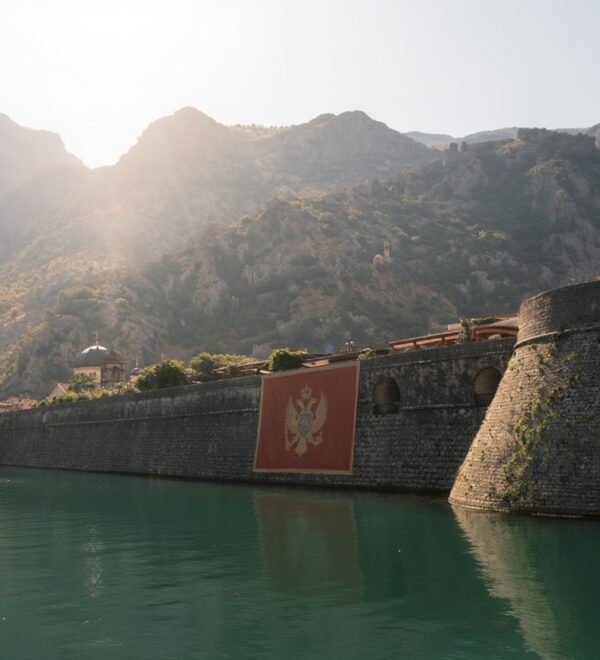
The best time to visit Montenegro is September. That’s the short answer and I’ll stand by it. The sea is still warm — it peaks in late July and holds that warmth through September. The cruise ships thin out after the first week. The Kotor wall walk at 7am in September is you, a handful of other people, and the most extraordinary view in the Adriatic, lit from the east at the angle where the bay turns silver. In July, the same walk is 400 people and 36-degree heat. Both versions of Montenegro exist. One of them is significantly better.
That said, Montenegro isn’t one destination — it’s two distinct landscapes bolted together in a country you can drive coast-to-mountain in 90 minutes. The coast (Kotor, Budva, Perast, Herceg Novi) and the mountains (Durmitor, Tara Canyon, Žabljak) have different optimal timings. This guide covers both.
I’m Tom. I’ve been based in Kotor Old Town for three years. I came for one month in 2022, found a flat for €650/month inside the walls, and never booked the return flight. What follows is how I’d tell a friend — actually, how I’ve told about two dozen friends — to time their Montenegro trip.
The Coast: When to Come (and When Not To)
The Montenegrin coast runs about 295km from Herceg Novi in the north to Ulcinj in the south. The Bay of Kotor — technically a fjord, though geographers argue about this, and it’s the deepest canyon in southern Europe — sits at the top. Budva and the sandy Riviera stretch south. The coastline shares the Adriatic climate: hot, dry summers, mild winters, spring and autumn that are genuinely pleasant rather than just “not as hot as August.”
**July and August** are peak season. The sea reaches 25–27°C. Every restaurant terrace is full by 8pm. The coastal road from Budva to Bar is gridlocked on weekend afternoons. Kotor takes the brunt of it — the cruise ship season runs May through October, but July and August see the most volume. On a busy week I’ve watched 12 ships dock in 7 days. The Old Town calculus: 900-year-old medieval streets, some alleys 60cm wide, 4,000 cruise passengers funnelling through them between 9am and 3pm. The Kotor walls charge €8 (about £6.70) for entry. You’ll queue at the base in July.
None of this makes July and August bad. It makes them appropriate for certain people: those who want a guaranteed beach holiday with full restaurant choice and all the beach bars open. Budva’s Slavija beach, Mogren, Jaz — they’re good beaches, busy in the way that beach resorts are busy in peak summer. If your Montenegro trip is primarily beach, and you have school-age children pinning you to August, go in August. But know what you’re booking.
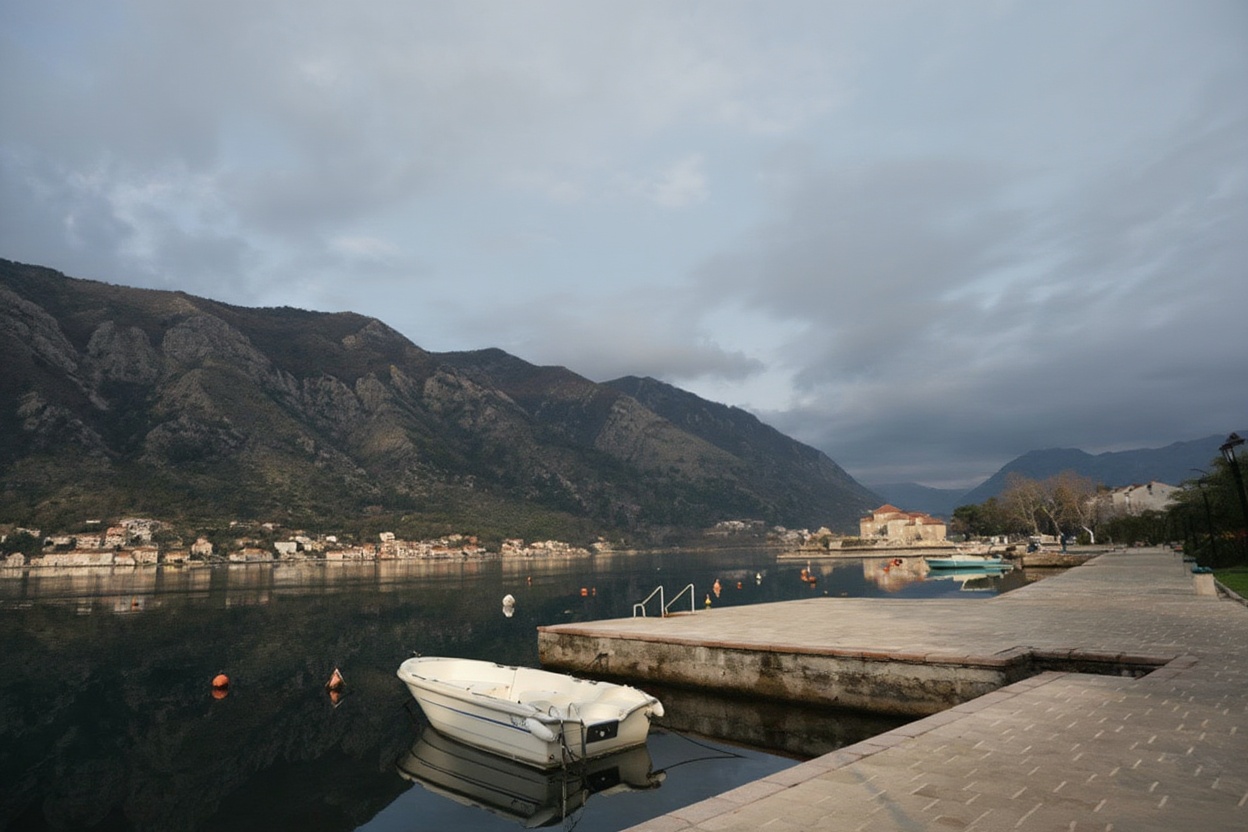
**September** is when the coast becomes the place I describe to people. The first week still catches the tail of August crowds. By week two, something shifts. The cruise ships thin out — there are still arrivals, but not the relentless parade of July. Restaurant bookings become easier. The Kotor Old Town at 7am is back to being a pleasure rather than a social experiment. The sea is at its best: it peaked in late July, held through August, and in September sits at 24–25°C with full visibility down to the seabed. The light in September on the Bay of Kotor — lower in the sky than August, hitting the water at the angle that makes the whole thing look like a painting — is the specific thing I keep trying to photograph and failing to adequately capture.
Accommodation costs drop in September. An Airbnb that costs €120/night in August might run €80 in September. Not uniform across every property, but the general direction is correct. A couple spending a week in Montenegro in October — which runs even cooler — paid about €480 total excluding flights in one documented case: €201 for a Budva Airbnb for 7 nights, plus transport, food and tours. That works out to roughly €28/night for accommodation. October is quieter than September and the same logic applies more emphatically.
**May and June** are my second choice. May is properly green — the mountains above Kotor are still lush from spring rain, the oleanders along the coastal road are flowering, and the beaches haven’t filled up. The sea is cooler in May (around 19–21°C), swimmable for some and too cold for others — the “cold sea” threshold differs by person and I won’t adjudicate. By mid-June the sea is solidly swimmable at 22–23°C and the crowds haven’t yet reached July levels. June is genuinely the sweet spot if September doesn’t work for your calendar: still warm, not yet overwhelming, everything open.
**April** works as a mild-shoulder option. The sea is cold. Some mountain routes may still have snow on the upper sections. Accommodation prices are lower, villages are quieter, and the coast has that slightly deserted, end-of-season quality — except it’s beginning of season, which has a different energy. Good for those who prefer quiet.
> **TOM’S HONEST TAKE**
> If you’re planning around Kotor specifically, check the cruise ship arrivals before you book your dates. The arrivals are publicly listed weeks in advance — you can find the Kotor port schedule online. Pick dates where there are fewer scheduled arrivals, particularly for any day you want to do the wall walk or spend the morning in the Old Town. This is not a hack. It’s the thing I tell every friend who visits and it makes a material difference.
The Mountains: Durmitor and the Interior
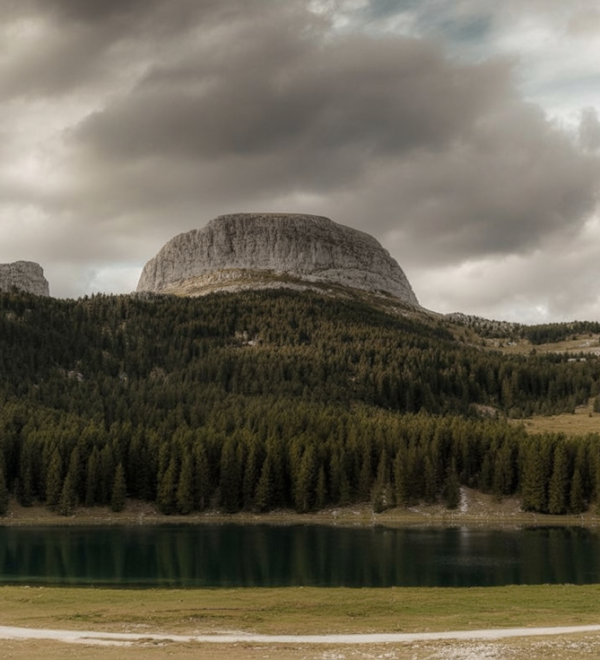
Most people planning a Montenegro coast trip don’t know about Durmitor. Then they Google it and it goes on the list. Durmitor is a national park in northwestern Montenegro — the Tara River Canyon (Europe’s second deepest after the Grand Canyon) runs along its northern edge. Žabljak, the main town, sits at 1,450 metres. The Black Lake is 3km from the centre and freezes in winter.
The Durmitor timing is different from the coast:
**June through September** is the hiking window. Trails are clear of snow from late May on the lower routes, late June on the higher ones. The Black Lake circuit (3.5km, an hour) is the baseline — do it, it’s extraordinary. The Bobotov Kuk summit (2,523m — Montenegro’s highest peak) requires a full day and solid fitness. Tara Canyon rafting runs May through September; the river is most dramatic in May–June when snowmelt is still feeding it.
**July and August in Durmitor** are warm (18–22°C in Žabljak) and busy by mountain standards — though “busy” here means a few hundred hikers rather than the Kotor situation. Accommodation books up; Žabljak has a limited stock of guesthouses and a couple of hotels. Book ahead for July and August.
**September in Durmitor** is the mountain equivalent of September on the coast: excellent. The summer crowds have thinned. The light is lower. The first of the autumn colour starts showing on the beech trees above the lake by late September. Temperature: 12–16°C. You’ll want a jacket in the evenings.
**January and February** are for skiing. Žabljak has a small ski resort — nothing compared to the Alps, but functional and cheap by European standards. A lift pass costs around €20–25/day (about £17–21). The resort is genuinely underused by Western European skiers. Kolašin, further south, has more extensive pistes and slightly better infrastructure. Both are in a different price bracket from anything in France, Italy or Austria.
**October through May** (excluding the ski season) is when Durmitor closes down. Most accommodation and restaurants in Žabljak shut after October. If you’re planning a shoulder-season mountain visit, check ahead — there is genuinely not much open.
Montenegro Month by Month
A clear summary for planning purposes:
**January–February:** Cold coast (8–12°C), ski season in the mountains. Kotor and Budva are quiet — some restaurants closed, but the Old Town has a completely different character when it’s just residents. Best time to rent in Kotor if you’re thinking about longer stays.
**March–April:** Warming up. Coast around 14–18°C. Green mountains, wildflowers from April. Sea is still cold. Shoulder season pricing. Quiet enough that you can have Perast almost to yourself.
**May:** First proper spring month. Sea 19–21°C (chilly for some). Mountains opening up. Tara Canyon rafting season starts. Crowds modest. Good value.
**June:** Sea swimmable (22–23°C). All coastal facilities open. Durmitor fully accessible. Before the August rush — probably the best month for a coast-mountain combined trip.
**July:** Peak of everything. Warmest sea (25–27°C). Maximum crowds in Kotor and Budva. Cruise ship season at full volume. Book far ahead. Still a very good holiday if you accept the context.
**August:** Same as July, slightly more so. The coast in August is the full Adriatic summer experience — full beaches, full restaurants, maximum prices. Nothing wrong with it if that’s what you want.
**September:** Tom’s first choice for the coast. Sea still warm. Crowds thinning. Cruise ships reducing. Prices starting to drop. The Kotor wall walk becomes pleasant again. September in Montenegro is one of the genuinely excellent autumn travel propositions in Europe.
**October:** Quieter still. Prices lower. Some seasonal restaurants closing. Sea cooling to 20–22°C. The inland and mountain areas start shutting for winter. Good for those who specifically want quiet. One documented couple spent about €480 for a full October week excluding flights — that’s the benchmark for budget travel in the off-season.
**November–December:** Off-season coast. Mild (12–16°C). Kotor has a Christmas market in December that draws weekend visitors. Not a beach trip but a reasonable city break.
Kotor Specifically: The Cruise Ship Calendar
Kotor deserves its own section because the timing question is more acute here than anywhere else in Montenegro. The city has been continuously inhabited since before the Romans. The Venetians built the walls in the 15th century, took them over from the Byzantines, and held the city for 400 years — which is why the Old Town looks like a piece of Venetian architecture transplanted to a fjord. The walls went up because the Ottomans kept trying to come in. They never succeeded. The architecture, the cat colony, the narrow streets, the Church of St Tryphon — all of this exists inside a walled perimeter that hasn’t fundamentally changed in six centuries.
Cruise ships started arriving in volume in the 2010s. In peak season, a day with three or four ships simultaneously docked means 6,000–8,000 extra people in a walled city with a permanent population of about 2,000 in the Old Town area. The mathematics are obvious.
**Cruise ship hours in Kotor** are generally 9am–4pm. The ships dock, the passengers tour, the ships depart. By 5pm on a day with multiple arrivals, the Old Town returns to something closer to normal. The evening — dinner from 7pm, a walk along the walls at dusk, a drink on the River Gate side — is generally unaffected.
The practical upshot for timing: **go to the Kotor walls early**. The wall walk charges €8 (about £6.70) and climbs 260 vertical metres to the fortress above. At 7am, the gate opens, the light is extraordinary, and there are a handful of people. By 10am, if there are ships in, it’s a queue. Do not do this walk at noon in July. I cannot be clearer on this.
The Perast alternative is worth knowing. Perast is 12km from Kotor — a 20-minute taxi (about €15 return) or 30-minute bus along the bay road. It has 400 permanent residents, two islands offshore (Gospa od Škrpjela and St. George), and one of the finest small piazzas on the Adriatic. The cruise ships can’t dock at Perast — the waterfront is too shallow. This is the best thing about Perast. In the same July week that Kotor is overwhelmed, Perast is busy but manageable.
What Everything Costs by Season
Montenegro uses the euro (€) despite not being an EU member — it adopted the currency in 2002 unilaterally. Accession negotiations with the EU are ongoing; the country has been a candidate since 2010. In practice, for visitors: everything is in euros, card payment is widely accepted in the main tourist areas, and prices are roughly 30–40% below equivalent Croatia.
**Accommodation:**
– Peak (July–August): Kotor Old Town flat, €80–150/night. Budva beach hotel, €100–200/night. Budget guesthouses €50–80/night.
– Shoulder (May–June, September–October): 20–35% below peak. An apartment that runs €120/night in August might be €80 in September.
– A documented couple’s Budva Airbnb for a week in October came to €201 — roughly €28/night. That’s the lower end of real prices in shoulder season.
**Food and drink:**
– Breakfast (prosciutto, bread, soft drink): €7 for two (~£5.90) — this is a standard kiosk price in the villages, not a café tourist menu.
– Lunch at a local restaurant: €7–8 per person for a proper sit-down meal.
– Beer or coffee: under €3 in almost all contexts.
– Njeguški steak with roasted peppers and a carafe of Vranac house wine: call it €20 for two if you’re eating at a proper konoba rather than a Kotor waterfront terrace.
**Transport:**
– Budva to Kotor by bus: €7 (about £5.90). Reliable and the correct way to do this leg.
– Taxi Kotor to Perast return: €15 (about £12.60). Negotiate before you get in.
– Verige ferry (Lepetane to Kamenari): €5/car, crosses the narrow neck of the Bay of Kotor in 4 minutes. Saves 45–60 minutes vs. driving the bay road. Almost nobody knows it exists. Take the ferry.
– Boat tours around Boka Bay: €12 per person (about £10) — described by one traveller as the best-value thing they did in Montenegro.
**Activities:**
– Kotor walls: €8 (about £6.70).
– National park entries: €2–5 per person depending on the park — a total of €14 for two people across two parks in one documented itinerary.
– Tourist tax: €1 per adult per night — this is collected by your accommodation, not a separate payment at a booth.
– Tara Canyon rafting: €40–60 per person depending on the section, through a Žabljak operator.
Combining Coast and Mountains
The most common mistake I see in Montenegro itineraries is treating it as coast-only. Montenegro is 13,812 square kilometres. Driving from Kotor to Žabljak takes about 2.5 hours. The landscape changes completely — you go from Venetian fjord to pine forest to high plateau with Black Lake at the end of it. A week that splits 4 nights coastal and 3 nights Žabljak covers both properly. A fortnight can include Herceg Novi, Kotor, Perast, Budva, Cetinje as a day trip, and Durmitor.
**The correct combined itinerary for September:**
– Arrive Herceg Novi or Tivat airport (the airport is at Tivat, 4km from Kotor).
– 3–4 nights Kotor Old Town. Kotor walls at 7am on day one.
– Day trip to Perast. Look at the two islands. Sit on the waterfront.
– Drive or bus to Budva for 1–2 nights. Mogren beach, the old town (smaller, less impressive than Kotor, still good).
– Drive up through Cetinje — the former royal capital, worth 3 hours — to Žabljak.
– 2–3 nights Žabljak: Black Lake, Bobotov Kuk if the legs are willing, Tara Canyon from the bridge.
– Back to Tivat airport.
The Question Nobody Asks: Montenegro in Winter
December through February on the coast is mild — Kotor averages 10–12°C in January. The Old Town is quiet. Resident quiet, not tourist quiet. My bakery opens at 6am regardless of the season. The cats are on the walls in winter the same as summer. There are no cruise ships from November to April. The Kotor walls at 9am in January with frost on the top section and nobody else there is a completely different experience from any summer visit — not better or worse, just a different country.
If you’re considering a longer stay — a month, or a winter base — Kotor in the off-season is a very good answer. Rents drop significantly; a flat I know inside the walls that runs €1,200/month in summer rents for €650 in winter. That’s the arrangement I have. The restaurants worth eating at stay open year-round because they have enough local trade.
- What is the best time to visit Montenegro?
- September is the best overall month. The sea is still warm (24–25°C), the cruise ship crowds thin out, accommodation prices drop 20–30% from August peaks, and the light on the Bay of Kotor is extraordinary. May and June are the second-best window — sea swimmable from mid-June, mountains green, no July crowds yet. July and August are peak season: warmest sea, most expensive, most crowded, particularly in Kotor and Budva.
- When does Kotor get the most cruise ship crowds?
- July and August see the heaviest cruise ship traffic — sometimes 3–4 ships simultaneously in the bay, meaning 6,000–8,000 extra visitors in a walled city with a permanent population of about 2,000. Cruise ship hours are roughly 9am–4pm; the Old Town settles considerably by evening. Check the Kotor port schedule before booking specific dates. September has cruise ships but significantly fewer. The walls charge €8 and the correct time to do the walk is before 9am regardless of season.
- Is Montenegro worth visiting in October?
- Yes — October is a good shoulder-season visit for the coast. Prices drop noticeably (one documented couple spent €480 total for a week including accommodation and transport, excluding flights). The sea is cooling but still swimmable at 20–22°C in early October. Kotor and Budva are quieter. Some seasonal restaurants close mid-to-late October. For Durmitor and mountain hiking, October is the end of the accessible season — trails are generally open in October but check conditions before the high routes.
- When should I visit Durmitor National Park?
- June through September for hiking. Trails from the Žabljak base are clear of snow by June and fully accessible through September. July and August are warm (18–22°C) and busiest; accommodation books up — reserve ahead. September for hiking has the same advantages as September on the coast: thinner crowds, good conditions. January–February for skiing at the Žabljak resort (lift passes ~€20–25/day, about £17–21). Most Žabljak accommodation and restaurants close October through December — check before planning a late-autumn visit.
- Is Montenegro expensive?
- Cheaper than Croatia by roughly 30–40% for equivalent quality. Peak season (July–August) coastal prices: accommodation €50–200/night depending on type and location. Off-season (October–May, excluding Christmas and New Year): materially cheaper. Food is good value year-round — €7–8 per person for a proper sit-down lunch, under €3 for a coffee or beer. The Budva-to-Kotor bus costs €7. The Kotor-to-Perast taxi is about €15 return. Montenegro uses the euro (€) despite not being an EU member.
- Can I visit Montenegro in winter?
- Yes — with adjusted expectations. The coast (Kotor, Budva, Herceg Novi) is mild in winter, around 10–12°C in January, with no cruise ships and a fraction of the summer visitors. Kotor Old Town in winter is genuinely atmospheric; most of the good year-round restaurants stay open because they have local trade. For mountain activity, January and February are ski season in Žabljak and Kolašin. Some coastal accommodation closes November–March; Kotor itself has enough year-round infrastructure to work as a winter base.