Ulcinj, Montenegro: The South Coast Town Worth the Extra Drive
Updated June 2026 — Tom Archer has been to Ulcinj four times in three years of living on the Montenegrin coast, including once in late October when most restaurants were still open and Velika Plaza was entirely empty. All prices and transport options verified June 2026.
Ulcinj sits at the southern tip of Montenegro, 30 minutes from the Albanian border and about 90 minutes’ drive from Kotor. Most visitors to Montenegro do the Kotor–Budva–Petrovac coastal run and turn back north before they get here. The loss is theirs. Ulcinj has a 12km beach, a clifftop Ottoman-era old town, a river island nudist resort with one of the most unusual settings on the Adriatic, and a Muslim-majority population that gives the town a cultural flavour nothing else in Montenegro matches. Here’s what you actually need to know.
Why Ulcinj Is Different from the Rest of Montenegro’s Coast
The Montenegrin coast from Herceg Novi to Petrovac is fundamentally Venetian — the architecture, the Catholic churches, the defensive walls, the DNA of coastal settlement. Then you keep driving south and Ulcinj happens, and it’s something else entirely.

Ulcinj spent centuries under Ottoman control after falling in 1571 — longer than any other Montenegrin coastal town. The old town on the cliff above the sea reflects this: the mosques, the hammam ruins, the layout of the streets, the architecture of the houses. The population is majority Albanian-speaking, with strong cultural and historic ties to northern Albania. The muezzin call sounds from the mosque in the old town. There’s also a less comfortable layer of history: Ulcinj was one of the Mediterranean’s most significant slave-trading ports under Ottoman rule, with captives from across the region passing through its markets. Miguel de Cervantes, the author of Don Quixote, is believed by some historians to have been held briefly in Ulcinj after his capture at the Battle of Lepanto in 1571 — the same year the Ottomans took the town. The museum in the old town covers this period. It’s worth the €3.
This isn’t exoticism for its own sake. It’s a concrete historical reality that makes Ulcinj feel like a different country from Kotor, which is 90km away but separated by centuries of divergent history. If you’ve done the rest of the Montenegrin coast and want to understand what made this country the crossroads it was, Ulcinj is the explanation.
Ulcinj Old Town: The Clifftop Fortress
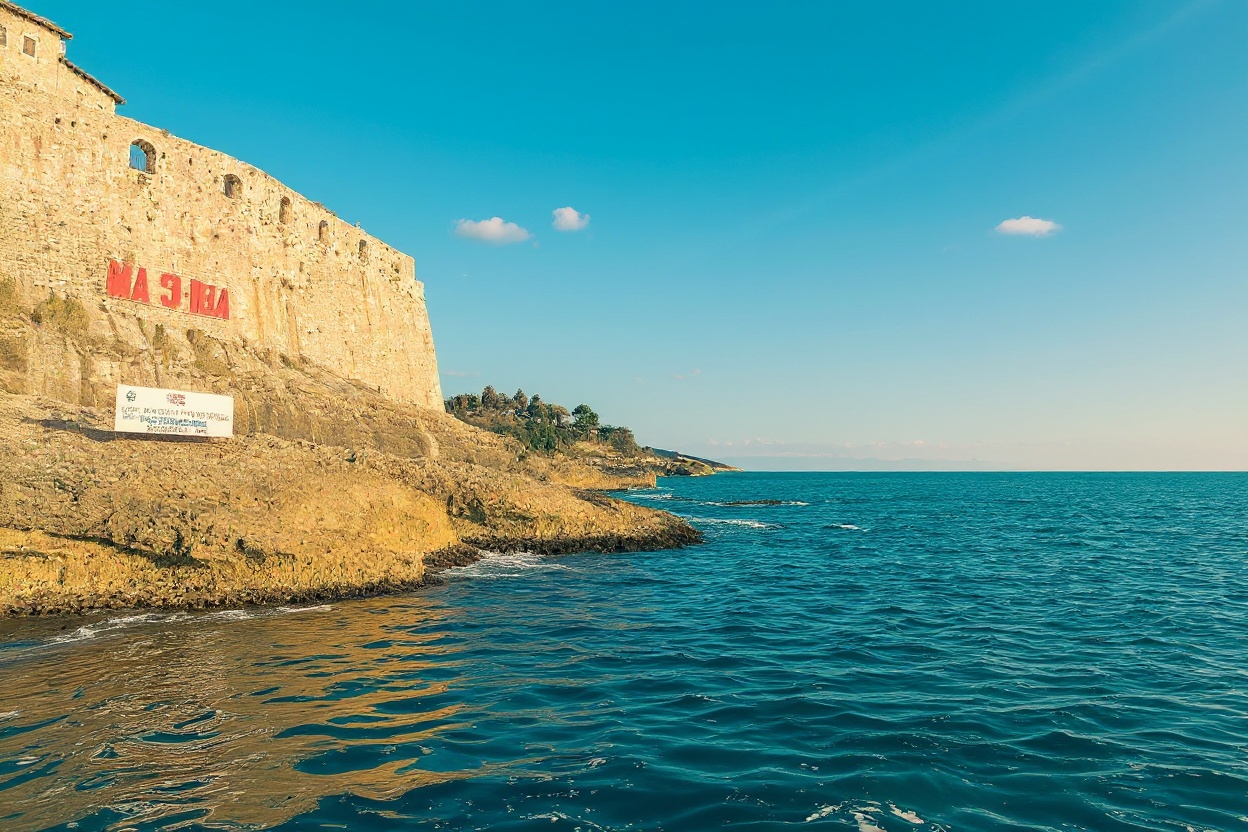
The old town of Ulcinj (Stari Grad) sits on a limestone promontory above the sea, enclosed by medieval walls that were substantially rebuilt by the Venetians and then further modified under Ottoman rule. The walls enclose a small settlement of houses, a mosque (the Former St. Mary’s Church, converted in 1571), a museum, and several restaurants with terraces hanging over the sea.
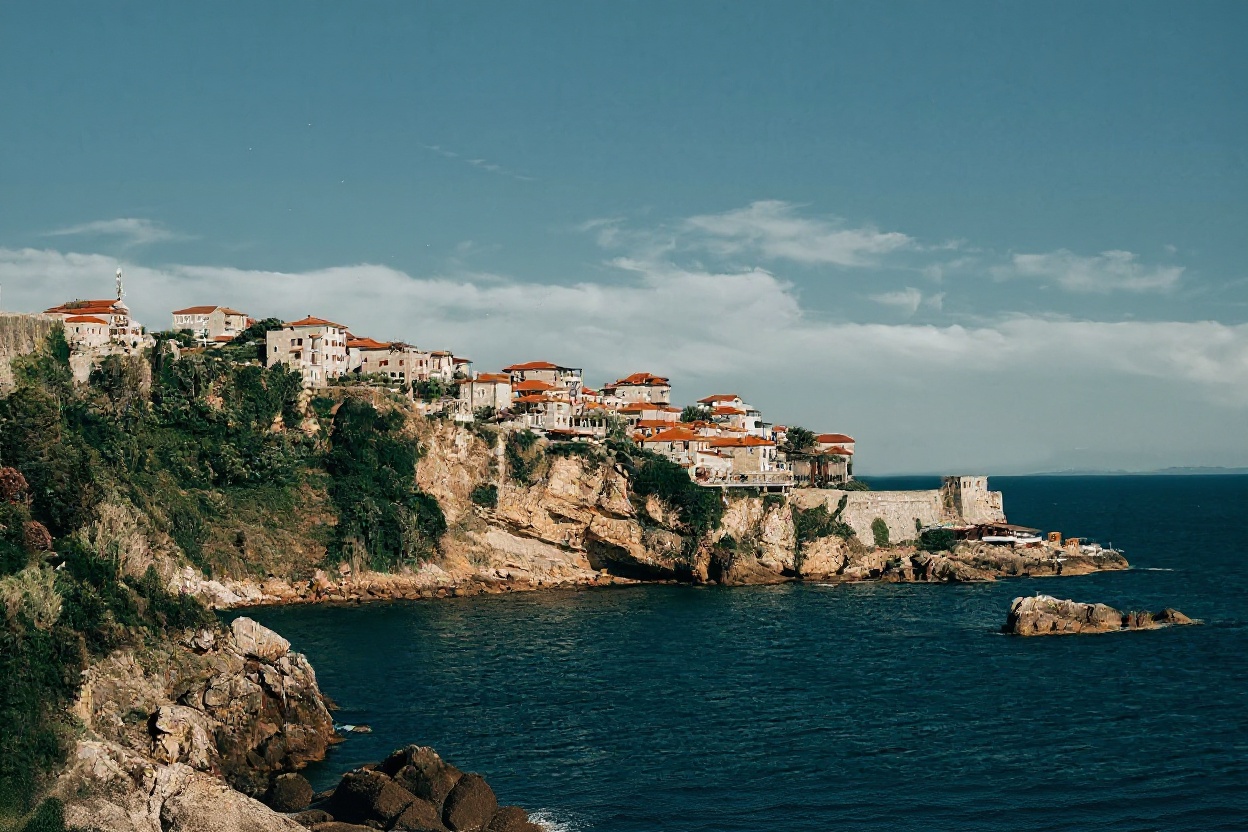
Entry: free. The museum inside the walls charges €3. Worth it for the context — the displays cover the Illyrian, Roman, Venetian, Ottoman, and Yugoslav periods in a compact building that used to be a bishop’s palace. The view from the seaward-facing walls over the small beach below and out to the open Adriatic is the reason to come here before lunch when the light is still angled rather than flat.
The old town is not large — you can walk the perimeter in 20 minutes. But the detail is in the small things: the Ottoman-era calligraphy above doorways, the mix of architectural styles within a few metres of each other, the mosque sitting alongside the ruins of a Venetian church. It’s a compressed physical record of everything that happened here, and it rewards slow attention.
Tom’s honest take: The Ulcinj old town is more interesting historically than aesthetically. It’s not postcard-pretty like Perast or Kotor Old Town. The streets are rough, some buildings are derelict, and it needs investment it hasn’t received yet. But the historical layering is the point — this is what a town looks like when it’s changed hands between empires rather than been carefully restored for tourism. Go for the context, not the Instagram.
| Ulcinj Quick Facts | |
|---|---|
| Getting there | From Kotor: ~90 min drive via Bar. Bus from Budva: 2 hours, €4–6. |
| From Podgorica | 1 hour by road — useful if flying in/out. |
| Velika Plaza | 12km of sand, 4km from town — local bus or taxi (€5–8) |
| Ada Bojana | River island, 25km from town, taxi ~€15–20 or car hire |
| Old town entry | Free. Museum inside: €3. |
| Best time | June, September, October — warm sea, manageable crowds |
| Season length | Longest on the coast — open through late October |
| Stay | Town beaches area or Velika Plaza — €30–70 for decent room in season |
Velika Plaza: 12km of Sand
Velika Plaza (literally “Great Beach”) is 12km of uninterrupted sand beach south of Ulcinj town, backed by a lagoon system and separated from the sea by a narrow bar of dunes. It is the longest sandy beach on the eastern Adriatic. In the north, near the town end, it’s developed — beach clubs, sunbeds, bars. As you walk south, it empties. By the time you’re 3–4km in, there’s significantly less infrastructure and significantly more space.
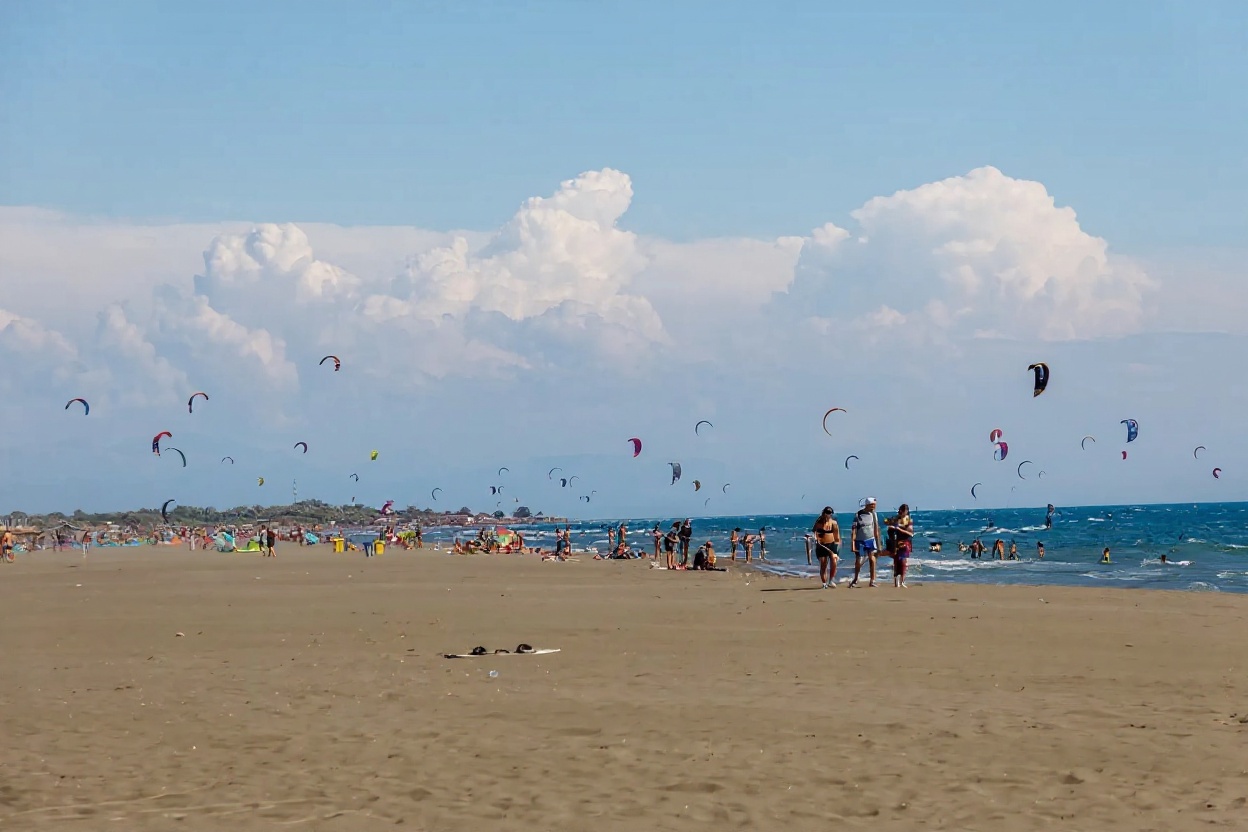
The sand is dark — mixed with minerals from the Bojana River — and the water shelves gradually, making Velika Plaza one of the better beaches on the coast for actual swimming rather than just looking at. The beach faces south, which means the sun is overhead rather than in your eyes, and in September and October it’s still warm enough to swim when the rest of the Montenegrin coast has gone quiet.
Getting there: from Ulcinj town, 4km south. Local bus runs in summer (€1). Taxi: €5–8 each way. Or rent a bike in town and cycle the coast road — flat, 20 minutes, and the view approaching Velika Plaza with the dunes and the sea ahead is genuinely good.
TOM’S PICK: Walk to the southern end of Velika Plaza in late afternoon (around 4–5pm) when the sun is lower and the beach crowds have thinned. The light on the Bojana delta from the south end of the beach, with the Albanian hills behind, is the Ulcinj image that doesn’t appear on travel blogs. Bring water — the south end has no infrastructure.
Ada Bojana: The River Island
Ada Bojana is a triangular river island formed where the Bojana River splits before reaching the sea, about 25km south of Ulcinj near the Albanian border. It has been a naturist resort since the 1970s — one of the largest in the Balkans — with a fishing village, several restaurants specialising in freshwater fish from the river, and a specific slow-time atmosphere that the regular coast doesn’t produce.
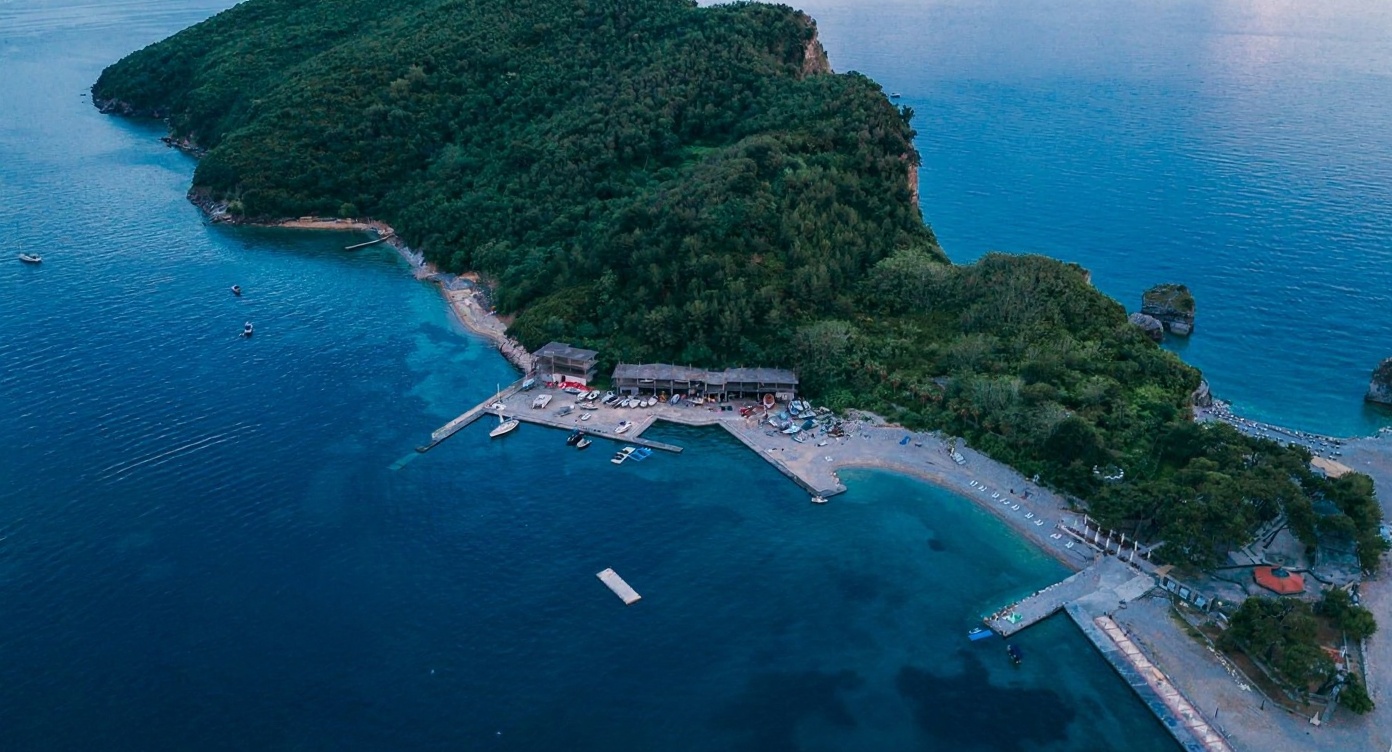
You don’t need to be a nudist to visit Ada Bojana. The restaurants are open to everyone, the beach on the river side is mixed, and the island is worth visiting purely for the setting — the river on one side, the sea on the other, catfish and carp on the menu, and the Albanian mountains visible to the south. The freshwater fish here is the best on the Montenegrin coast, caught that morning and grilled simply. Expect €12–18 for a full fish meal with bread and salad.
Getting there: 25km from Ulcinj town. No regular bus — taxi (€15–20 each way) or rent a car. Worth combining with a Velika Plaza visit on the same day.
What to Eat in Ulcinj
Ulcinj’s food scene reflects its cultural position between Montenegrin coast cooking and Albanian-influenced cuisine. A few specific things:
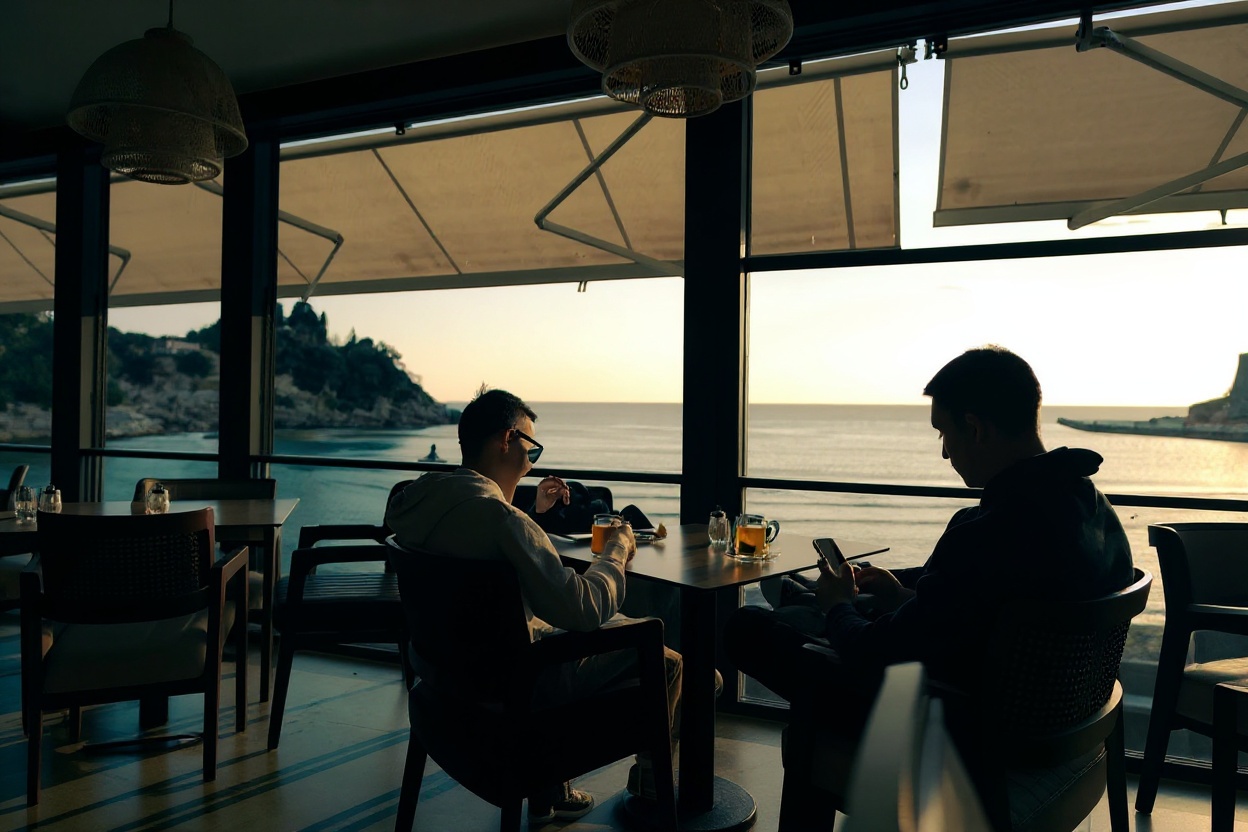
Fresh fish and seafood: The restaurants on the old town terrace and along the main beach promenade do the standard Adriatic menu — grilled fish, octopus salad, seafood risotto. Quality is consistently good because the supply chain is short. Expect €12–20 for a fish main course.
Burek and Albanian pastry: The Albanian cultural influence shows up in the bakeries — börek (filo pastry with cheese or meat) is ubiquitous and very good at €1–2 per portion from the morning bakeries near the market. Different from the Montenegrin/Balkan burek in the filling style and flakiness of the pastry.
Olive oil from Ulcinj: The Ulcinj area has some of the oldest olive groves in the region — trees that date back hundreds of years. Local olive oil sold at the market or in small bottles at restaurants is worth buying. It’s greener and more peppery than Italian equivalents. €5–8 for a 500ml bottle.
Grilled meat from the Albanian tradition: The qebap (grilled minced meat on skewers, Albanian style) at the small restaurants near the old town entrance is distinct from the Montenegrin ćevapi — more heavily spiced, served with raw onion and flatbread rather than ajvar. €4–6 for a portion.
Ulcinj vs. Budva: Which One to Choose
This comes up a lot, so here’s the honest version. Budva is the Montenegrin coast’s main resort town — better infrastructure, more restaurants, more nightlife, better transport connections, and significantly more tourists in July and August. If you want ease of access and entertainment options, Budva wins on those metrics.
Ulcinj wins on: longer beach, more interesting historical layering, less crowded in peak season (the extra drive keeps the numbers down), a genuinely different cultural atmosphere, and a longer shoulder season. If you’re specifically here for the beach, Velika Plaza beats anything Budva has. If you want the historical and cultural texture of the Adriatic under three different empires compressed into a small old town, Ulcinj is the one.
The correct answer for most visitors who have a week on the coast: base in Kotor or Budva, day trip or overnight to Ulcinj. You need a car. The drive down from Budva via Bar is coastal most of the way and takes about 1h45m. This is a sensible thing to do with a day.
Where to Stay in Ulcinj
Ulcinj’s accommodation options split into two distinct zones: the town itself (good for exploring the old town, market, restaurants on foot) and the Velika Plaza hotel strip (better if you’re primarily here for the beach and don’t mind being 4km from the centre).
Town centre / Mala Plaza area: The small beach below the old town (Mala Plaza — “small beach”) has a cluster of guesthouses and small hotels within walking distance of everything. Palata Venezia is the standout — a converted old building with a terrace looking directly over the old town beach, doubles €55–85 in season. Hotel Dvori Balšića has a similar clifftop position with slightly more rooms at €45–70. Both book out in July–August with 2–4 weeks’ notice required.
Velika Plaza hotels: The beach strip has a range of large and small hotels geared toward sun-and-sea visitors. Hotel Mediteran is the longest-established, reliable if unexciting, doubles €60–90 with breakfast in peak season. Smaller guesthouses along the beach road offer rooms at €30–50 — fine for a beach-focused stay, less interesting if you want to explore the old town without a taxi journey.
Budget: Several family-run guesthouses (sobe — pronounced SOH-beh, meaning “rooms”) around the bus station and market area offer basic rooms at €20–35 per night. No pool, minimal English, perfectly clean. The guesthouses signposted toward the old town entrance tend to have better positions and better morning light than those near the main road.
Book anything in July–August at least three weeks ahead for Ulcinj — it’s smaller than Budva and the good places genuinely fill up. June and September: a week ahead is usually sufficient.
Getting Around Ulcinj and the South Coast
The town centre of Ulcinj is small and walkable — the old town, Mala Plaza, the market, and the main promenade are all within 15 minutes on foot. The layout is simple: the old town sits on the clifftop at the east end, the beach promenade runs west along Mala Plaza, and the main market and bus station are a five-minute walk inland from the waterfront. What requires transport is the Velika Plaza strip (4km south) and Ada Bojana (25km south).
Local bus: A seasonal minibus runs between the town centre and Velika Plaza in summer, roughly every 30–60 minutes, €1 each way. Useful and reliable enough for a beach day. Stops at the northern end of Velika Plaza — walk south from there.
Taxi: Plentiful in season, €5–8 to Velika Plaza, €15–20 to Ada Bojana. Agree the price before you get in. For Ada Bojana, negotiate a return trip including wait time (2–3 hours is typical for a lunch visit) — €30–40 for the round trip is reasonable and avoids the hassle of finding a return taxi at a remote island location.
Car hire: The most flexible option for the south coast. Renting in Budva or Bar (both have airport proximity and larger fleets) and driving south gives you full control of the Velika Plaza and Ada Bojana timing. A day’s car hire from Bar or Podgorica: €30–45 for a standard automatic. The road south from Ulcinj to Ada Bojana near the Albanian border is paved and straightforward.
Bicycle: The coast road from Ulcinj town to Velika Plaza is flat and bikeable in about 20 minutes, with a reasonable verge most of the way. Several shops in town rent bikes at €8–12/day — ask at your guesthouse for the nearest. Good for the town-to-beach commute; less practical for Ada Bojana (25km, minimal shade on the southern section, and the return in afternoon heat is punishing).
The Albanian border crossing at Sukobin (15km south of Ada Bojana) is open to tourists with valid EU or UK passports. If you’re heading onward to Shkoder or the Albanian coast, crossing here avoids the busier inland crossings. The road on the Albanian side is paved to Shkoder. This is the logical continuation of a south-Montenegro itinerary — Ulcinj is genuinely a transit point as much as a destination.
The Mistake Tom Made in Ulcinj
First time I drove down to Ulcinj was a day trip from Kotor in early August. I left at 10am — reasonable in most circumstances, catastrophic for beach planning in peak summer.
Velika Plaza at noon in August is 4km of humanity. Every sunbed claimed by 9am. The road down to the beach parking from the coast road was a 40-minute queue of hire cars and coaches. I eventually parked, walked 15 minutes to the water, and spent two hours on a beach towel with someone else’s umbrella six inches from my ear.
The lesson: Ulcinj in August requires an early start or an overnight stay. Leave Kotor by 7:30am to be on Velika Plaza by 9:30am — you’ll find space, the light is better, and the water temperature is identical. Or go in September. September Ulcinj — warm sea, emptier beach, open restaurants, 24°C air temperature, 23°C sea — is one of the better travel decisions available on the Montenegrin coast. The town loses about 60% of its summer visitors after the first week of September and keeps nearly all its infrastructure open through October. That ratio — quiet beach, open town — is the Ulcinj worth making the drive for.
- How do I get from Kotor to Ulcinj?
- Drive: 90 minutes via Bar on the E80 coastal road. No ferry shortcut on this stretch — it’s a straight road south. Bus from Budva: 2 hours, €4–6, several daily departures in summer. Bus from Bar: 1 hour, €2–3. Having a car is the most flexible option since Velika Plaza and Ada Bojana both require wheels to reach comfortably.
- Is Ulcinj worth visiting as a day trip from Kotor?
- Yes, but an overnight is better. A day trip works if you leave early (7:30am from Kotor), covers the old town in the morning, beach in the afternoon, and returns by evening. With an overnight you can also reach Ada Bojana properly and catch the old town at different times of day. The extra hour of drive time each way (vs. Budva) is the main cost — decide if the payoff is worth it for your itinerary.
- When is the best time to visit Ulcinj?
- June or September are ideal — warm enough for swimming, manageable crowds, full restaurant season. Ulcinj’s season runs longer than the rest of the coast (into late October) because of its southern latitude. July and August are crowded but not unusable if you arrive early on Velika Plaza. October: quiet beach, some restaurants closing, sea still 22°C, genuinely peaceful.
- Can you walk from Ulcinj town to Velika Plaza?
- It’s 4km from the town centre to the northern end of Velika Plaza — walkable in about 50 minutes on a flat coast road, bikeable in 15–20 minutes. In summer heat, taxi or bike is more sensible than walking at midday. A local summer bus runs every 30–60 minutes for €1. The coast road between town and Velika Plaza has decent shade trees for part of the way.
- Is Ada Bojana worth visiting from Ulcinj?
- Yes — the river island setting is completely unlike anything else on the coast, and the freshwater fish restaurants make it a worthwhile lunch destination regardless of the naturist angle. Budget €15–20 taxi each way from Ulcinj. Best combined with a Velika Plaza morning: drive south from Ulcinj, stop at the far end of Velika Plaza for a swim, continue to Ada Bojana for lunch, return by 4–5pm.
That’s Ulcinj. It’s the town at the end of the road that rewards the people who keep driving when everyone else turns north at Budva. September is the month to do it properly. Go early on the beach. Eat the fish at Ada Bojana. Questions in the comments — I check most days.
One practical addition that doesn’t appear in most Ulcinj guides: the drive south from Bar to Ulcinj passes through a stretch of coast — roughly the section around Sutomore and the Valdanos olive grove — that is genuinely beautiful and largely ignored. The Valdanos Bay specifically has an ancient olive grove running down to the sea, accessible by a short walk off the main road. The trees are 2,000 years old in some cases. Park on the road, walk 10 minutes, swim in a bay with century-old olive trees for company. Nobody else is doing this. It is free. Add it to the Ulcinj drive south.
Full Montenegro itinerary context: Montenegro Budget Per Day for what the south coast actually costs, and Is Montenegro Safe? for the Albanian border crossing practicalities if you’re continuing south.