Sveti Stefan Travel Guide: The View, the Reality, and What’s Actually Worth Your Time
Updated June 2026 — Tom Archer has been living in Kotor for three years and visits the Budva riviera regularly. Sveti Stefan specifically: four visits, two of which were solely for the viewpoint and one of which involved a very good fish at Pržno. Prices verified June 2026.
Sveti Stefan is the most photographed place in Montenegro and one of the most misunderstood. The iconic image — pink-orange medieval stone buildings on a small island connected to the mainland by a narrow causeway, Adriatic blue in all directions — is real and you can see it for free from the clifftop viewpoint. What you cannot do, unless you’re paying Aman resort rates, is walk on the island. This guide explains what you actually get, and what to do with the rest of the day once you’ve taken the photograph.
What Sveti Stefan Is (and What Happened to It)
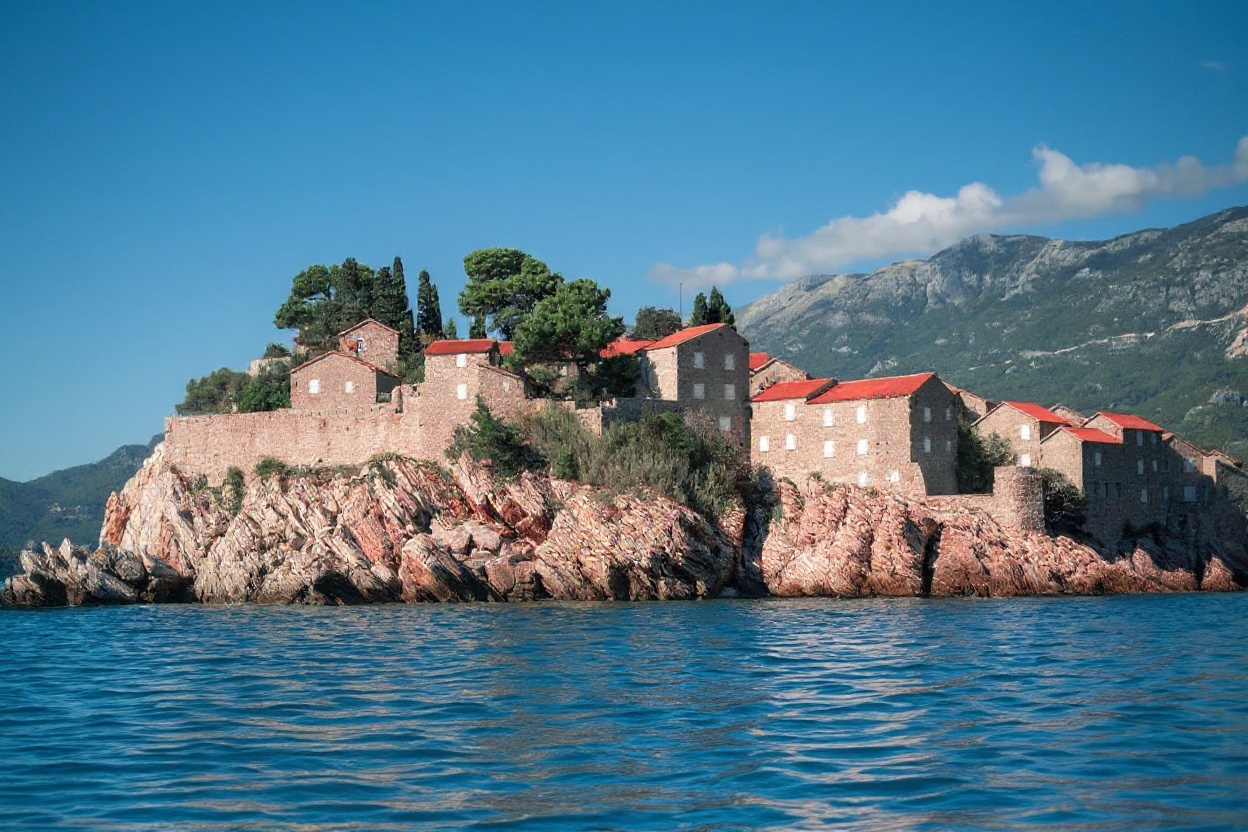
Sveti Stefan began as a 15th-century Venetian fishing settlement on a small rocky island about 100 metres offshore. The original residents built their houses from the local pink-grey stone, arranged them around a narrow warren of lanes, and fished the Adriatic from the natural harbour on the north side. By the early 20th century it was a quiet fishing village of about 400 people.
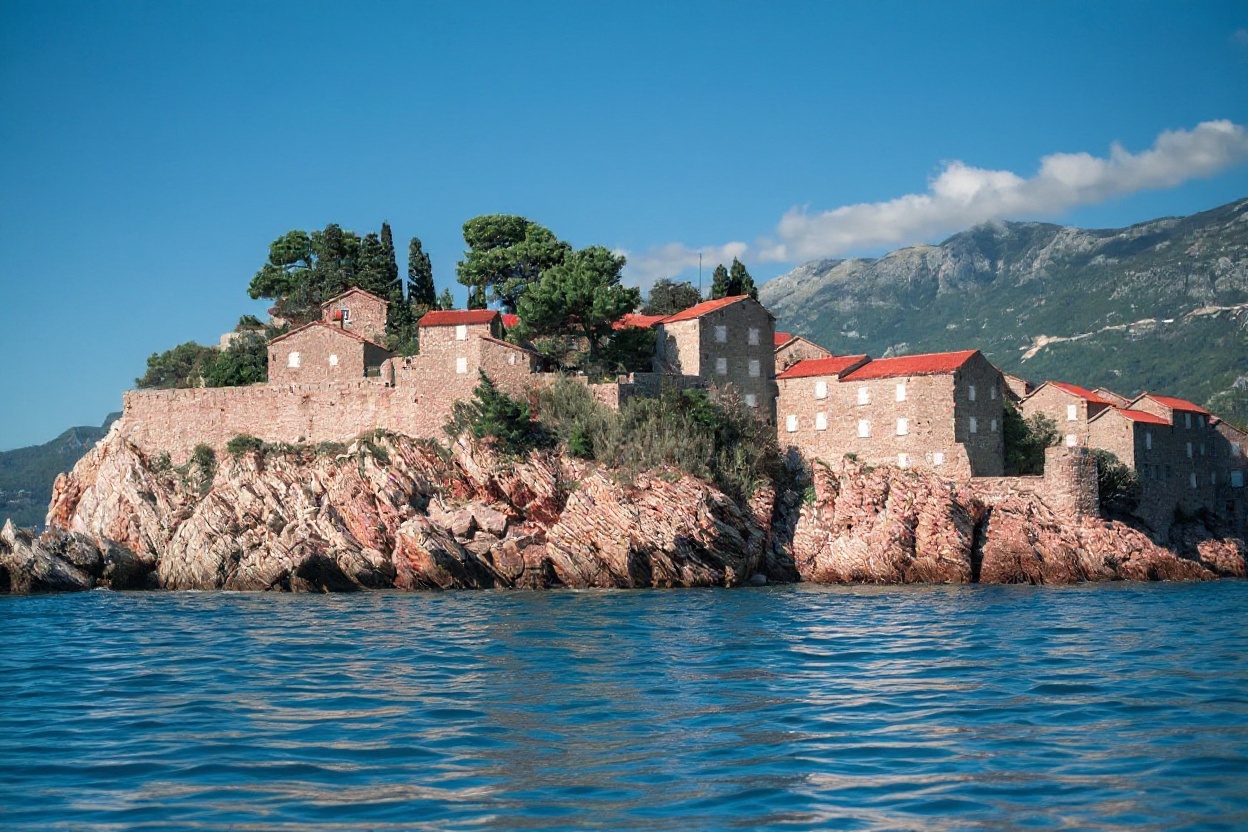
In 1954, the Yugoslav communist government decided the village was more valuable as a tourist resort than as a place where people actually lived. The residents were relocated to the mainland — compensated, depending on who you ask — and the entire island was converted into a state-owned luxury hotel. The stone buildings became hotel rooms. The lanes became corridors. It opened in 1960 and became the favoured destination of international celebrities, heads of state, and anyone the Yugoslav government wanted to impress. Sophia Loren. Kirk Douglas. Various politicians who politely did not mention that the island’s residents had been moved out.
Since 2008 it has been operated as Aman Sveti Stefan, part of the Aman resort group. Room rates start around €700 per night and climb from there depending on season and villa. The causeway is gated. You do not walk on Sveti Stefan unless you are a guest or have booked a restaurant reservation that justifies the access fee.
This is worth knowing before you arrive expecting to wander the lanes.
The Viewpoint: The Thing That’s Actually Free
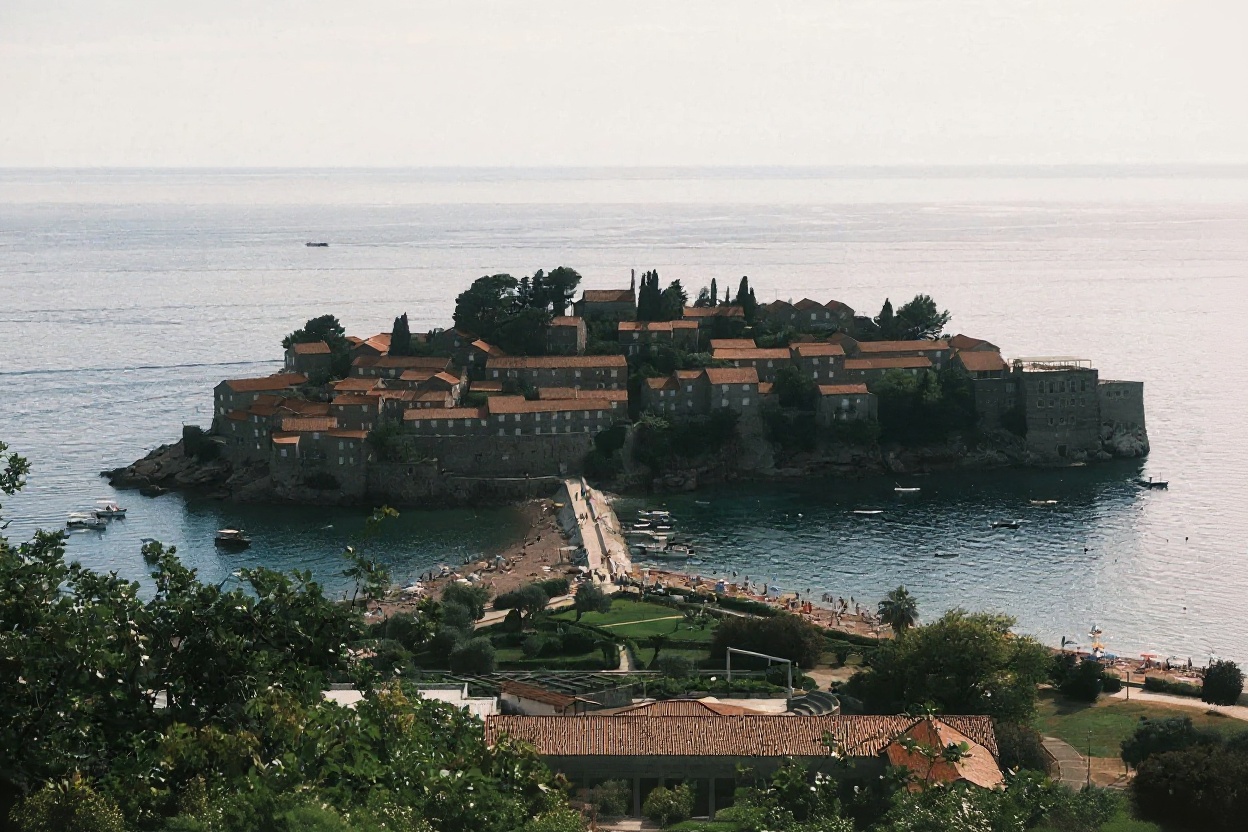
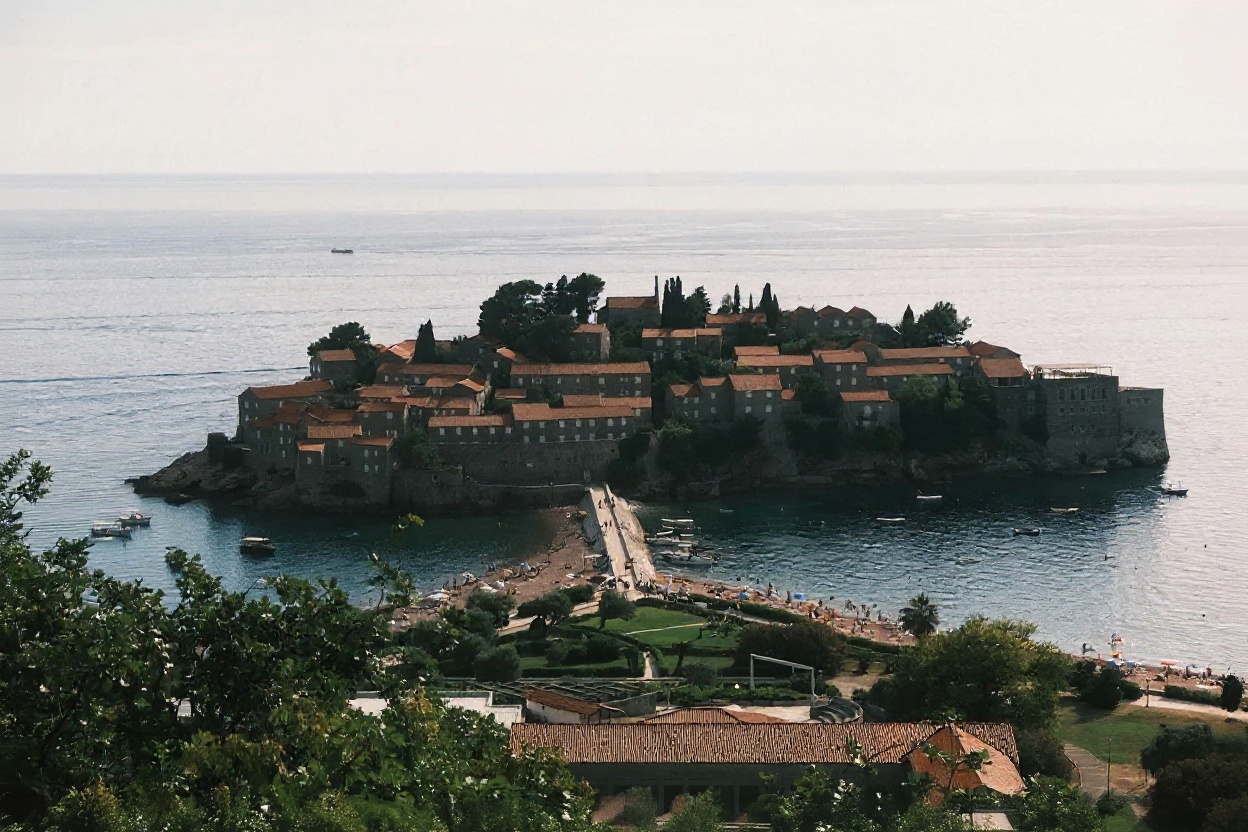
The standard Sveti Stefan photograph — island in the foreground, causeway, Adriatic beyond, the mainland hills framing the shot — is taken from the clifftop parking area on the road above the island. There is no charge to use this viewpoint. There is a car park. It takes about two minutes from the road.
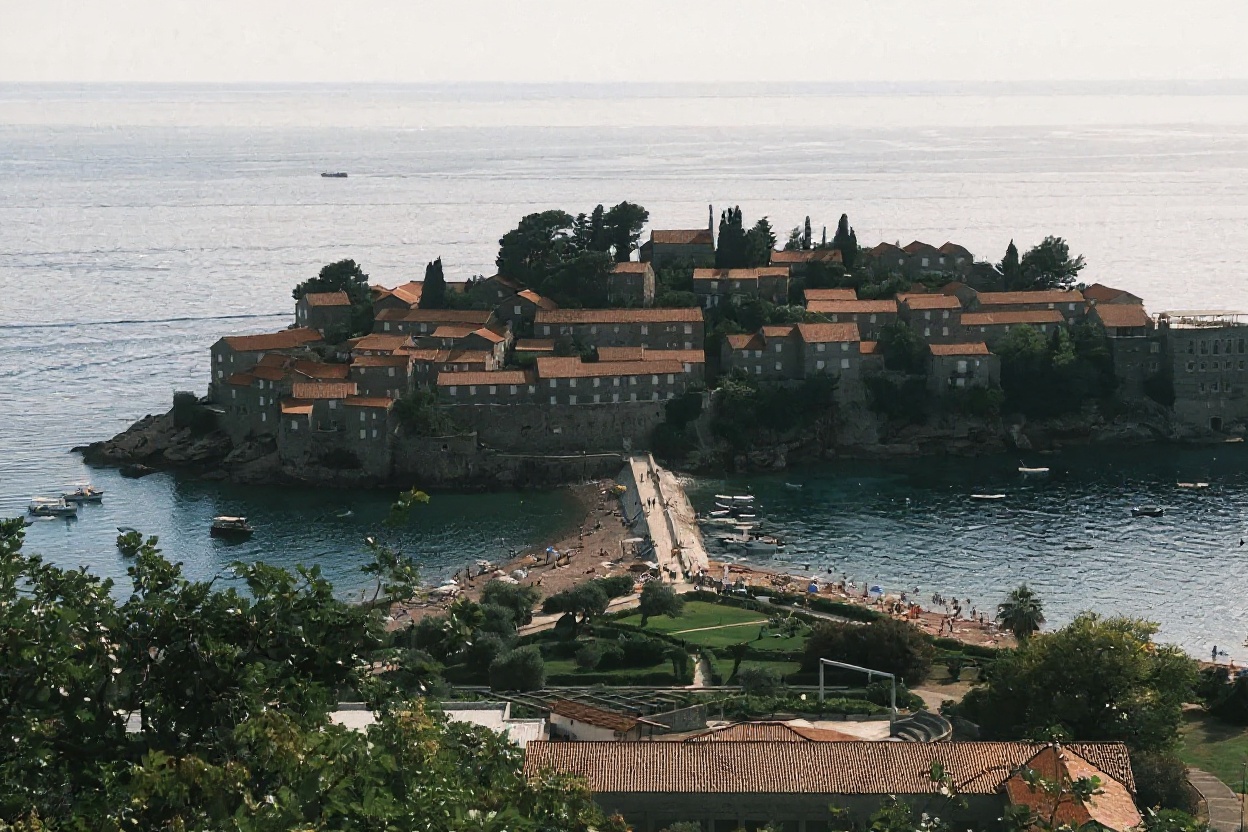
The viewpoint is excellent. The elevation puts you above the island level, which gives you the full picture — the causeway, the harbour, the density of the stone buildings, the surrounding water. In the morning before the sun gets high, the pink stone catches the light at a low angle and the colour is extraordinary. In the late afternoon the same thing happens in reverse. At midday it’s just very bright and the car park is full of coaches.
TOM’S PICK: Come to the viewpoint either first thing in the morning (before 9am) or in the two hours before sunset. The midday version — full overhead sun, coaches, organised tour groups with selfie sticks — is fine but functional. The early or late version is the reason people put Sveti Stefan on postcards.
From the viewpoint, the road continues south along the clifftop. After about 300 metres there’s a second viewpoint — less visited, slightly elevated, with a different angle on the island that shows the south face rather than the causeway. Worth walking to if the main viewpoint is busy.
The Beaches: What You Can Actually Access
The beaches flanking the Sveti Stefan causeway are a source of confusion for most visitors. Here’s the situation as of 2026:
The public beach area north of the causeway — accessible from the road, free entry, pebble beach with reasonable swimming. Basic facilities (a beach bar, some loungers for hire). The view of the island from here is at water level rather than elevated, which is a different but equally interesting perspective. Lounger hire: €10–15 per pair.
Queen’s Beach (Kraljičina plaža) — the beach on the south side of the causeway, historically associated with the Montenegrin royal family, now under the Aman Sveti Stefan umbrella. Access arrangements change periodically — at various points it has required a day pass linked to the resort. Check current access terms before planning your day around it. When accessible publicly, it’s a lovely pebble beach with clear water and the island close up on your right.
Villa Milocer beach — the private beach belonging to Aman Sveti Stefan’s Villa Milocer property on the mainland, north of the island. Guests only.
The honest summary: the free beach access north of the causeway is adequate for swimming, the view of the island from water level is good, and if you want an uncrowded beach with good facilities, Pržno village 1km north is the better option.
| Sveti Stefan Essentials (2026) | |
|---|---|
| Distance from Budva | 6km south — 10 min by taxi (€10–12) or local bus |
| Distance from Kotor | 35km — 40 min by car or taxi (~€35–40) |
| Viewpoint | Free — clifftop parking area above the island, 2 min from road |
| Island access | Aman Sveti Stefan guests only — from ~€700/night |
| Public beach | Free entry north of causeway — loungers €10–15/pair |
| Pržno village | 1km north — small fishing village, restaurants, better beach |
| Petrovac | 15km south — quieter town beach, good for a half-day |
| Best time to visit | May–June or September — July/August is overcrowded |
| Currency | EUR — Montenegro uses euro without being EU member |
Pržno: Where to Actually Have Lunch
Pržno is a small fishing village 1km north of Sveti Stefan — a 15-minute walk along the coastal path or a 3-minute taxi ride. It has a small sandy-pebble beach, several seafood restaurants on a terrace overlooking the water, and the kind of atmosphere that Sveti Stefan’s beach area has slightly lost to resort management.
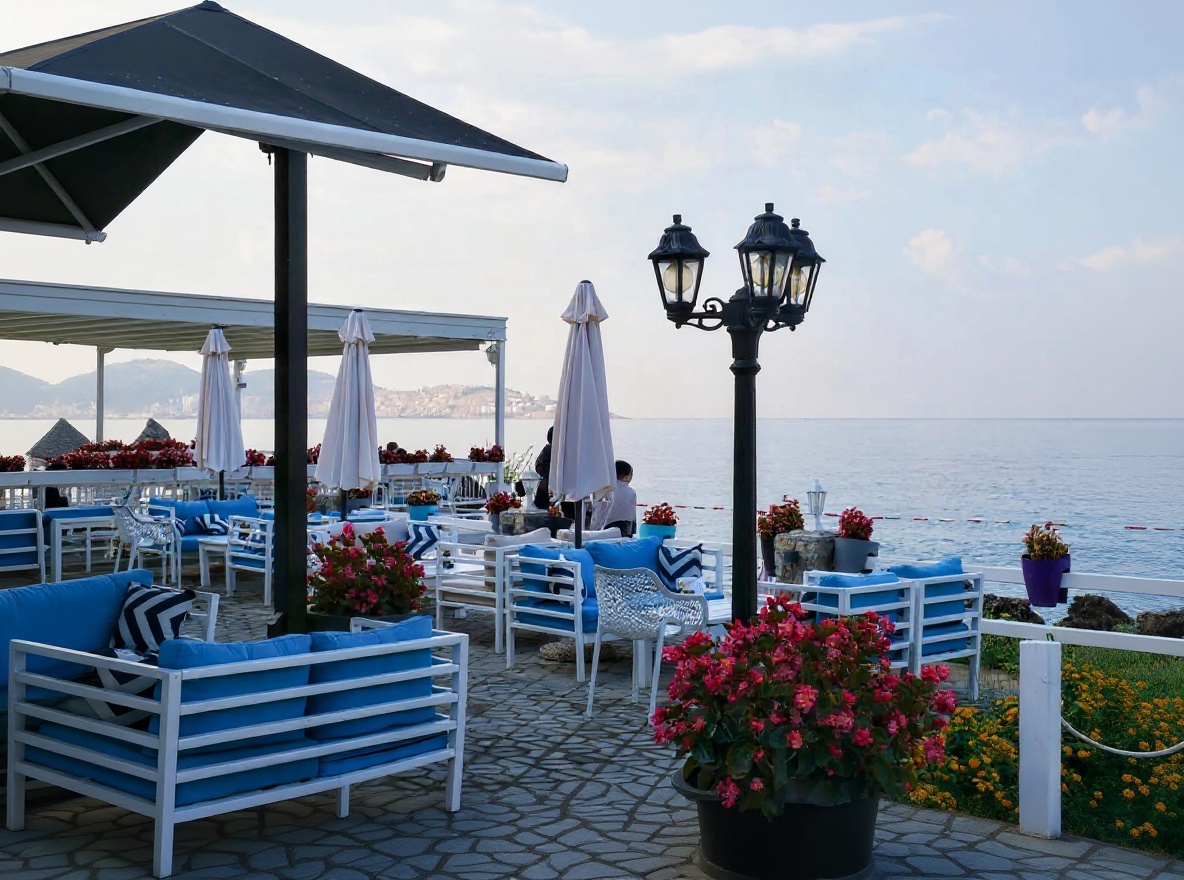
The beach at Pržno is smaller than Budva but less crowded in peak season, with the same clear Adriatic water. A few fishing boats still work from here. The restaurants on the terrace serve grilled fish, seafood risotto, and the black risotto (crni rižoto — squid ink, cooked down properly) that is one of the better things to eat on the Montenegro coast.
Restaurant Ogni — the most reliable of the Pržno options, with terrace seating above the beach and a view back toward Sveti Stefan island. Grilled sea bass: €18–24. Crni rižoto: €14–18. The kind of lunch that justifies the drive from Kotor by itself.
REAL TALK: I planned a day at Sveti Stefan once thinking I’d walk around the island, have lunch on the causeway, do the whole thing. Arrived to find: gated causeway, no restaurant on the causeway accessible without resort reservation, beach area with beach bars charging resort prices. Drove up to Pržno, ate extremely well, swam in uncrowded water, looked back at Sveti Stefan from the right distance. Unplanned improvement. The lesson: Pržno is the actual plan, not the fallback.
Milocer Park and Villa Milocer
About 500 metres north of Sveti Stefan along the coastal road is the Milocer Park — a forested area containing Villa Milocer, the former summer residence of the Yugoslav royal family (and before that, the Montenegrin royal family). The villa itself is now part of the Aman Sveti Stefan property and accessible only to guests.
The park around it — pine forest, coastal paths, a promenade above the sea — is partially accessible on foot via the coastal path from Pržno. The path runs through the park and gives you the pine-and-sea combination that the coast around Sveti Stefan does well. It’s a good 45-minute walk from Pržno through the park and back, and the path itself is pleasant regardless of the destination.
Worth noting: the Milocer coastline from the water — if you’re kayaking or on a boat — shows the full picture of the estate, the private beach, and the relationship between the villa and Sveti Stefan. Several kayak hire operations in Budva do guided coastal tours that include this stretch. About €30–40 per person for a 2.5-hour guided paddle.
Petrovac: The Better Day on the Coast
If you have a car, Petrovac is 15km south of Sveti Stefan on the coastal road and is, honestly, one of the more pleasant small towns on the Montenegro coast. It has a proper sandy beach (unusual on this stretch of coast, which is mostly pebble), a 16th-century Venetian fortified tower above the bay, a calm promenade with restaurants, and a fraction of the crowds of Budva in July and August.
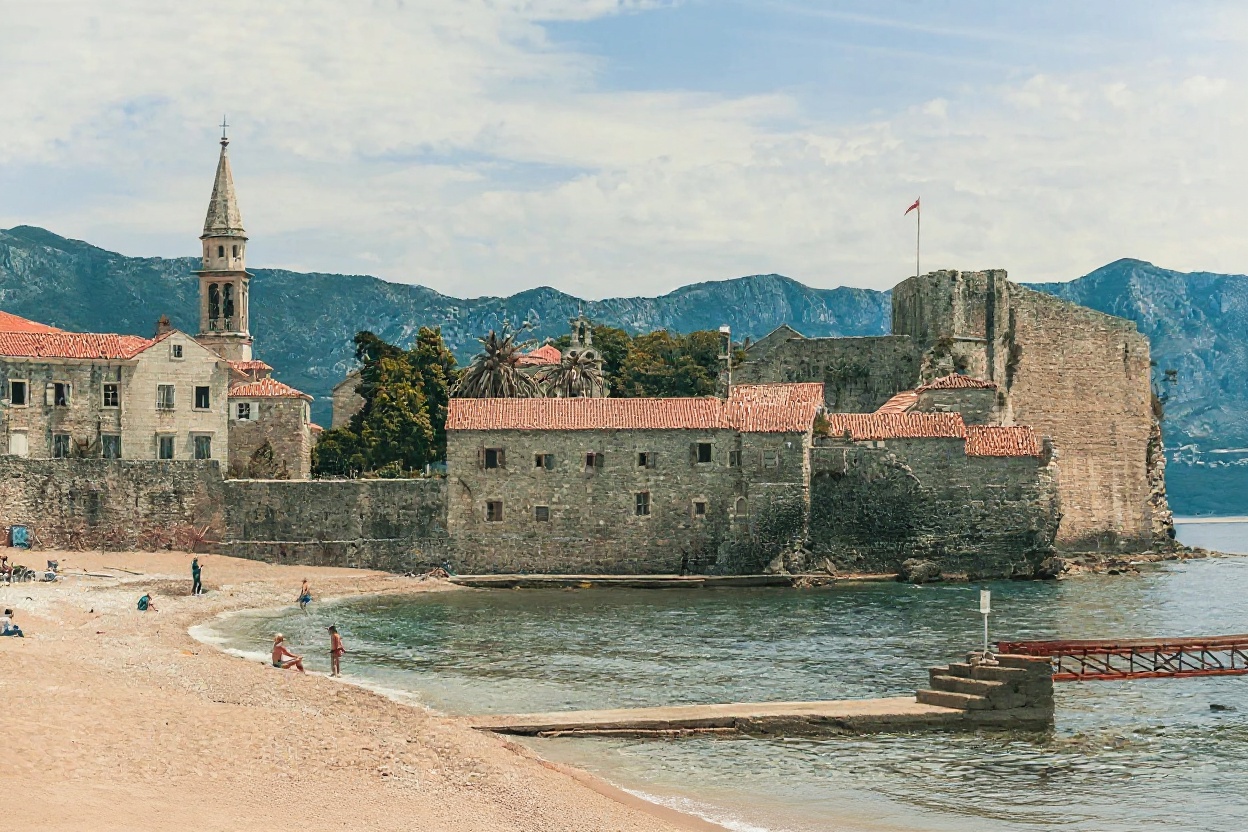
The beach at Petrovac curves in a gentle arc between two headlands. The water is clear, the sand is real rather than the imported-and-raked variety, and the town behind it has an architectural coherence — Venetian stone, church bells, a main square — that Budva’s development has somewhat diluted.
The fortress above the beach (Kastel) dates from the 16th century and is walkable from the main promenade. No charge to walk up. Views over the full bay. Takes 20 minutes return. On the south side of the bay, the Gradište Monastery sits in olive groves above the sea — a small Orthodox monastery with a terrace view that explains why monks chose this location.
Petrovac works as a half-day extension from Sveti Stefan — drive south, walk the promenade, swim, have lunch, drive back. Or as a day base if Budva feels too busy, with Sveti Stefan as the morning stop on the drive south. Either works.
Where to Eat Near Sveti Stefan
Beyond Pržno, there are several options within range of Sveti Stefan for different budgets and situations.
Restaurant Drago (Sveti Stefan village, mainland) — on the approach road to the causeway, before the resort gate. Traditional Montenegrin food — njeguški steak (smoked ham and cheese inside the beef), roasted lamb, local cheese. This is the place for a proper Montenegrin meal rather than Adriatic seafood. Mains €12–22. The njeguški steak is the thing to order.
Pržno restaurants — as noted above, the best seafood option in the immediate area. Budget €20–35 per person for a proper lunch with wine.
Budva town (6km north) — if you want more choice, Budva has a full range from beach bars to proper restaurants. The Budva guide covers the food options in detail, including the Old Town restaurants that are worth booking ahead in summer.
Getting to Sveti Stefan
From Budva: 6km south on the coastal road. Taxi: €10–12 one way. The local bus line (roughly every 30 minutes in summer, departing from Budva bus station) costs about €1.50 and stops at Sveti Stefan village on request. The bus is fine if you’re not carrying beach gear.
From Kotor: 35km, 40–50 minutes by car or taxi (€35–45). Most people driving from Kotor include Sveti Stefan as a stop on the way to or from Budva rather than as a standalone destination — which is the right approach. The coastal road south of Budva is attractive and Petrovac extends the day naturally.
Walking from Budva: possible via the coastal path — about 5–6km, 80–90 minutes at a moderate pace. The path is partly coastal, partly road, and the stretch just south of Budva is not scenic. If you want to walk back from Sveti Stefan to Budva rather than to it, that’s marginally better — you’re walking toward Budva’s beach scene rather than away from it.
Parking at Sveti Stefan: there’s a car park below the viewpoint and further space at the approach road. In July and August it fills by 10am. Arrive early or come by taxi/bus.
When to Visit Sveti Stefan
May and June are the best months. The water is warm enough to swim by late May, the coastal road has traffic but not the summer volume, and the beaches have space on them. The viewpoint photograph is equally good year-round — it’s the beach access and the surrounding experience that improves outside peak season.
September is the other ideal window — late summer light, thinner crowds, the sea still warm, and Pržno’s terrace restaurants back to a manageable wait. Tom’s personal preference for most of the Montenegro coast.
July and August are functional but crowded. The viewpoint will have coaches. The public beach north of the causeway will be at capacity by 11am. The road through Sveti Stefan village will be slow. It’s still worth the stop — the view is the view regardless — but calibrate your expectations. An early start (before 9am) changes the experience significantly.
For the full seasonal picture across Montenegro — Kotor, Durmitor, the Bay of Kotor in different months — the Montenegro best time to visit guide has the complete breakdown.
Is the Aman Sveti Stefan Stay Worth It?
This is a legitimate question if money isn’t the barrier. Tom’s honest take:
The setting is extraordinary — you’d be sleeping on a medieval island in the Adriatic in a room that was someone’s house 70 years ago. The Aman group runs the property well and the service is consistent with what the price implies. If you’re going to spend €700–1,500 per night on a hotel in Europe, this is one of the settings that justifies the conversation.
What it isn’t: a discovery. The island is small, the routes between buildings are set, and the full-resort atmosphere — other wealthy guests, managed experience, menus pitched at the room rate — is what it is. The views from inside are not meaningfully better than from the clifftop viewpoint outside, because you’re at island level rather than above it. The beach is the island’s private north harbour beach, which is pleasant but not dramatically superior to Pržno or Petrovac.
If you’re considering it: shoulder season (May or September) gives you the best combination of weather, access, and service without the August peak rates. A one-night stay is enough to understand the island. Two nights adds very little that the first night doesn’t cover.
Sveti Stefan vs Perast: Which Is More Worth It?
Visitors to the Montenegro coast often have to choose between multiple stops and Sveti Stefan and Perast — both iconic, both photographed — come up together. They’re different experiences.
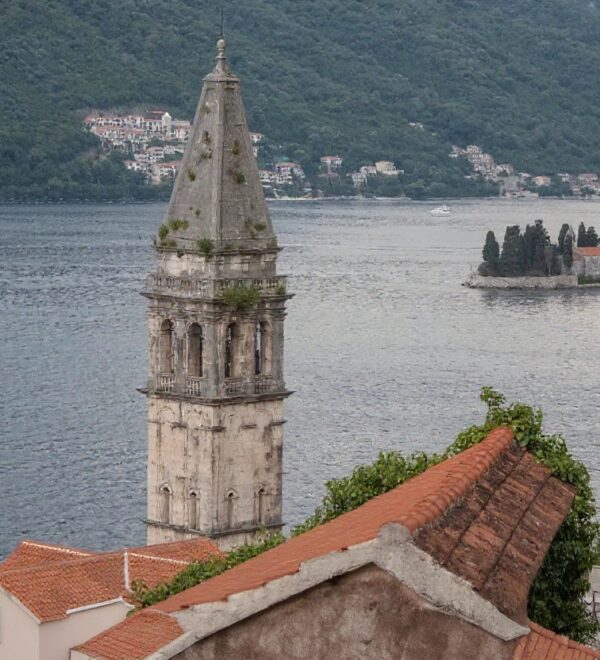
Perast is a living village you can walk around — 400 residents, cafés open on the promenade, the boat crossing to Our Lady of the Rocks island is €5 and you can walk inside the church. Sveti Stefan is a view of a place you cannot enter. Both are worth the stop. If you have to choose one to spend more time at, Perast rewards time; Sveti Stefan rewards an hour.
The Perast guide covers the full picture for that village, including the Our Lady of the Rocks boat crossing and the best time to go. For the Bay of Kotor more broadly, the Kotor guide has the regional itinerary context.
- Can you walk on Sveti Stefan island?
- No — the island is private to Aman Sveti Stefan resort guests. The causeway is gated and access is controlled. You can see the island from the viewpoint, the public beach, and the surrounding coastal path, but the island itself requires a guest booking or a restaurant reservation arranged through the resort.
- Is the Sveti Stefan viewpoint free?
- Yes. The clifftop parking area above the island is free to visit. Walk from the car park to the viewpoint edge — 2 minutes. The second viewpoint 300 metres further south along the clifftop road is also free. Both give excellent angles on the island.
- What’s the nearest beach to Sveti Stefan that’s free?
- The public beach area north of the causeway is free entry — pebble beach, clear water, basic facilities. Lounger hire is €10–15/pair. Pržno village 1km north has a slightly nicer beach with better restaurant options and marginally fewer crowds in peak season.
- How do I get to Sveti Stefan from Budva?
- Taxi: €10–12, 10 minutes. Local bus: ~€1.50, roughly every 30 minutes from Budva bus station, ask the driver for Sveti Stefan stop. Walking via coastal path: 5–6km, about 90 minutes. Car: 6km south on the coastal road, park at the viewpoint car park before it fills.
- Is Sveti Stefan worth visiting for just a few hours?
- Yes — the viewpoint takes 20 minutes, the public beach area is worth an hour for a swim, and Pržno for lunch adds another 2 hours. Budget half a day from Budva and you’ve done Sveti Stefan properly. The full day version adds Petrovac (15km south) for another beach and a Venetian fortress.
- What’s near Sveti Stefan to combine it with?
- Pržno (1km north, lunch and beach), Petrovac (15km south, excellent town beach and fortress), and Rijeka Reževići Monastery (8km south, small Orthodox monastery in olive groves above the sea). Most people combine Sveti Stefan with Budva as a half-day coastal drive rather than treating it as a standalone destination.
Sveti Stefan is 20 minutes of viewpoint and an afternoon of very good coast if you arrange the day correctly. The island itself is behind a gate. The view is not. Go early, drive to Pržno for lunch, consider Petrovac on the way back, and don’t let the resort situation spoil what is, from the right distance, one of the genuinely good-looking places on the Adriatic. That’s the lot. Questions in the comments.
One thing the view from the clifftop doesn’t communicate: the scale of the pink-grey stone against the deep blue at this latitude is specific to the early morning light in May, June, or September. The same view at noon in July — harsh overhead sun, the stone bleached rather than coloured — is a different image. It’s still a good photograph. It’s not the photograph. If you care about the light, the early morning trip from Budva is a 20-minute drive and sets the whole day up correctly. The Pržno lunch is better at 1pm than at noon. The timing works.
For the wider Budva riviera and what else is worth the drive south: Things to Do in Budva covers the coast’s main resort town, and the Perast guide gives you the north bay comparison for the same day or the next.