Last updated: June 2026 — prices and logistics verified June 2026.
Budva is Montenegro’s beach resort. That sentence contains everything you need to calibrate your expectations. It has a medieval Old Town, which dates to at least the 5th century BC and is genuinely worth an evening. It has decent beaches. It has the most developed nightlife on the Montenegrin coast. It has hotels and apartments at every price point and a July and August that make Kotor look quiet. It is excellent at being a beach resort. It is not a substitute for Kotor — and understanding the difference is the single most useful thing I can tell you before you book.
I’m Tom. I live in Kotor Old Town. I visit Budva regularly — to remind myself why I based in Kotor, and because Mogren Beach is genuinely good, and because the drive along the riviera south toward Sveti Stefan at golden hour is one of those Adriatic experiences that doesn’t get less beautiful for repetition. Here is what’s actually worth your time.
Budva Old Town
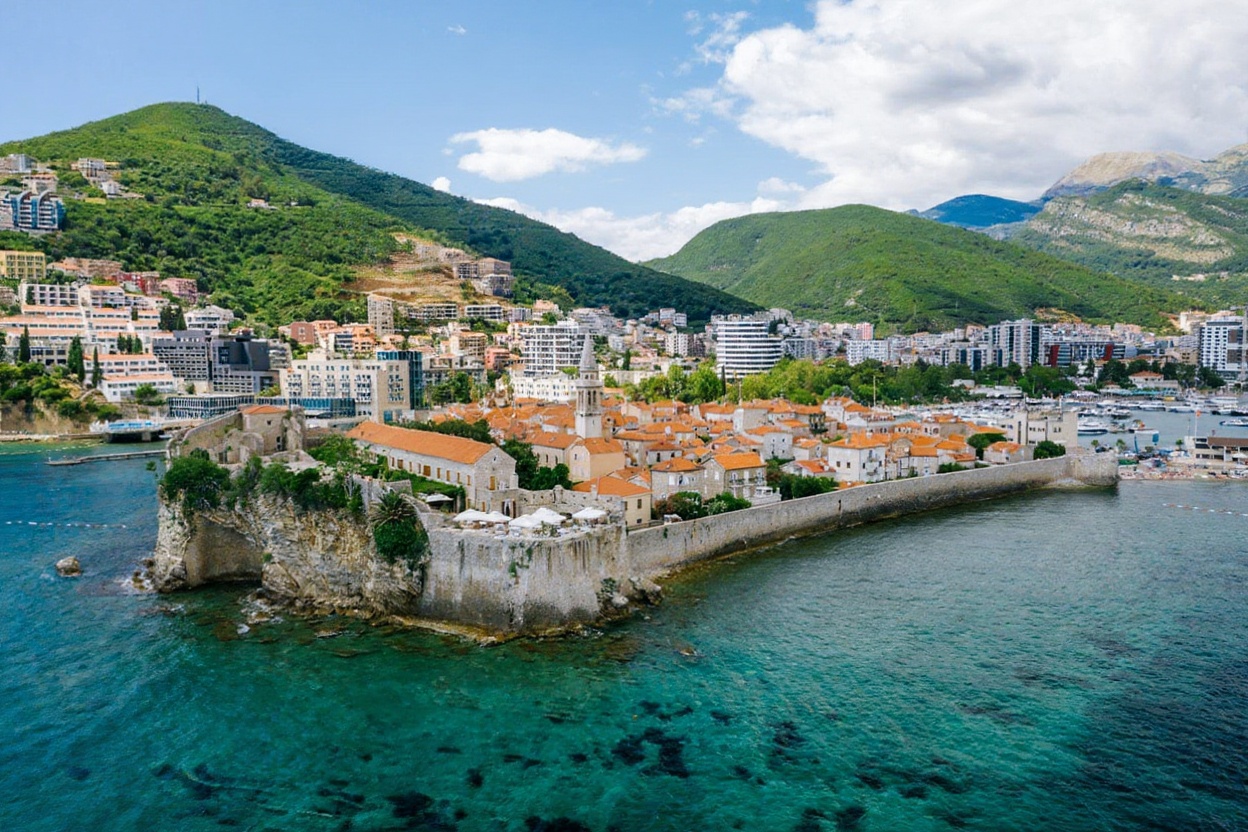
The Old Town — Stari Grad in Montenegrin — sits on a small peninsula jutting into the Adriatic. It’s walled, it’s pedestrianised, it’s genuinely old. The first settlement here dates to the 5th century BC, which means the Greeks were here before the Romans, the Romans before the Byzantines, the Byzantines before the Venetians, and the Venetians before the Austro-Hungarians. That layered history is visible in the architecture if you know what you’re looking at.
The **Citadel** is the main attraction — a fortress at the seaward tip of the Old Town, built by the Venetians in the 15th century and rebuilt after the 1979 earthquake (which severely damaged the Old Town; the reconstruction was comprehensive). Entry costs **€4 (~£3.40)**. There’s a terrace at the top with a view of the Adriatic and the Old Town roofline below. Worth it; don’t spend more than 45 minutes.
The Old Town streets are narrow, flagged in limestone, and lined with restaurants, bars, jewellery shops, and the occasional church. The **Church of the Holy Trinity** (14th century, Serbian Orthodox) and **St. Ivan’s Church** (7th century Catholic, heavily rebuilt) are both in the Old Town and both open to visitors. Neither requires more than 15 minutes.
**The walk on the walls** is possible — a short section of the Old Town walls is walkable and gives you the view across to Sveti Stefan peninsula on a clear day. Not the 4.5km Kotor circuit; more of a short terrace with good photographs.
**When to visit:** Early morning in peak season. The Old Town pedestrian streets fill with day-trippers and cruise excursion groups from about 10am in July and August. Before 9am, you get the space and the light. In the evening — from 7pm — the Old Town comes into its own as a dining and bar area, with the cruise passengers back on their ships and the restaurants filling with people who are actually staying.
> **TOM’S HONEST TAKE**
> The Budva Old Town is a pleasant half-day. It’s smaller than Kotor Old Town, less dramatically set (no 600-metre mountain directly above it), and the restaurant quality near the tourist drag is uneven. Walk it, see the Citadel, have a coffee on the waterfront. Then go to the beach. That’s the correct Budva itinerary.
The Beaches
This is the reason most people come to Budva. The coastline around the town has several beaches within walking distance of the Old Town, each with different character.
**Mogren I and Mogren II** are the ones worth knowing about. They’re reached by a 10-minute walk south from the Old Town along a cliffside path — past the Old Town walls, through a short tunnel cut through the rock. Mogren I is longer, pebble and sand mixed. Mogren II is around the headland, smaller, more enclosed, and consistently described as less crowded than the main town beaches. Both have clear water. The cliffside path itself is scenic — the wall of the Old Town above you, the Adriatic below. Go early: these beaches fill quickly in July and August but the cliff path means most casual visitors don’t bother.
**Slovenska Beach** is Budva’s main beach — 1.6km of sand and pebble directly north of the Old Town, lined with beach bars, sunbed operators, and watersports rental. It’s the most accessible beach from central Budva and consequently the busiest. Sunbeds and umbrella: **€5–10 per day (~£4.20–8.40)** depending on position and operator. The water is clean. The beach itself is broad enough that you can find space even in August, though you won’t be alone.
**Ričardova Glava** is a smaller beach directly next to the Old Town walls — rocky, small, and overcrowded in peak season. Good for a quick swim but not a day destination.
**Dukley Beach** is south of the Old Town, managed by the Dukley Hotel (a luxury property). Access requires a deposit — effectively a minimum spend at the beach bar. If that’s not what you want, Mogren is the alternative.
**Jaz Beach** is north of Budva, about 4km by road — a long, wide, exposed bay with sand rather than pebble. It’s used as a music festival venue (Jaz hosts outdoor concerts) and has a more open, less enclosed feel than the town beaches. Quieter than Slovenska during the day, with a mix of families and younger visitors. Taxi from central Budva: **€5–7 (~£4.20–5.90)**.
Sveti Nikola Island
The island sits directly offshore from Budva — visible from the Old Town walls, accessible by boat from the harbour. It’s about 2km offshore, uninhabited (save for a beach bar in season), with two small beaches and walking paths through pine forest. The island goes by the nickname “Flower Island” (Ostrvo Cvijeća) from the wild flowers that cover the interior.
**Getting there:** Boats run from the Budva harbour throughout the day in season. Return fare: **€5 (~£4.20)**. Journey time: 10–15 minutes. Last boat back is typically late afternoon — check before you board.
Worth an afternoon. The beaches on the island (notably Platamuni on the eastern side) are cleaner and less crowded than the main town beaches. The pine forest walk takes about 30 minutes. There’s a bar/restaurant on the main beach. It’s a simple, pleasant half-day escape from the Budva crowds.
Sveti Stefan
Sveti Stefan is 6km south of Budva — a 15-minute drive or a 25-minute local bus (approximately **€2/~£1.70**, departs from the main bus stop on the edge of Budva). It’s technically a separate destination but functionally a half-day from Budva, and most visitors staying in Budva include it.
The view: a small island (formerly a fishing village, now a luxury resort operated by Aman Resorts since the 1950s) connected to the mainland by a sand causeway, with red-roofed stone houses rising from it and the Adriatic and the Paštrovska Riviera curving behind. It is accurately represented in photographs. From the public beach below and from the road above, it is extraordinary.
You cannot enter the island resort without a booking (minimum rates: around €700–1,000/night, depending on season). The public beach at the base of the causeway — Sveti Stefan Beach — is accessible, has decent swimming, and gives you the full view. Tom’s position: go for the view, have a swim, have lunch at one of the restaurants on the mainland side. An overnight at Aman is a different category of trip.
**What to do around Sveti Stefan:** the coastal road continues south to Petrovac — a quieter, less developed beach town 17km from Budva that makes an excellent alternative base or half-day extension. Petrovac has a smaller beach, a modest Old Town, and a substantially more relaxed atmosphere than Budva in peak season. Local bus from Budva: approximately **€3 (~£2.50)**.
Boat Trips Along the Riviera
The Budva Riviera — the coastline running roughly from Bečići north of Budva to Petrovac in the south — is better seen from the water than from the coastal road. Boat trips from Budva harbour are available throughout the season.
The standard trip covers the Budva coastline, Sveti Stefan (viewed from the sea), and some of the smaller coves and beaches accessible only by boat. Duration: 3–4 hours. Price: **€12–20/person (~£10–17)**, depending on whether it’s a large shared tour boat or a smaller private vessel. Booking: you can often book from the harbour directly — “just show up at the shore and ask” is the honest advice, though in peak July–August it’s worth booking a day ahead.
The more extended **Montenegro 360 Grand Tour** — covering a larger circuit including Blue Cave (Plava špilja), Sveti Stefan, and other sites — runs approximately **€29/person (~£24)**. This is the tour that gets recommended across most Budva travel resources and delivers a full-day on-water experience.
**Blue Cave (Plava špilja):** a sea cave south of Budva, accessible only by small boat. The light enters through an underwater opening and reflects blue off the interior walls. Best in morning light. Included in most riviera boat tours or accessible as a separate short trip.
Day Trips from Budva
Budva’s position on the coast makes it a reasonable base for the rest of southern Montenegro, though I’d argue Kotor is a better hub for the whole country. From Budva:
**Kotor** (35km north): **€7–8 by bus (~£5.90–6.70)**, 45 minutes. The bus runs regularly from Budva’s main bus station. Kotor Old Town, the walls (€8 entry, go at 7am), Perast by taxi (€15 return from Kotor). A full day is comfortable; two nights makes the trip properly worthwhile.
**Cetinje** (35km northeast, inland): the former royal capital of Montenegro. National Museum in the former palace, the Cetinje Monastery, mountain scenery on the drive up. Accessible by bus or taxi. Entry to the National Museum complex: **€10 (~£8.40)**. A half-day from Budva; combine with the coastal road back via Budva to Petrovac.
**Monastery of Ostrog:** one of the most significant pilgrimage sites in the Orthodox world — built into a vertical cliff face, about 75km from Budva. Visited by three million people a year. Day trip from Budva: organised tours run approximately **€12/person (~£10)**. It is a genuinely extraordinary building, carved into a near-vertical limestone cliff at 900m. Worth the trip if historical and religious architecture interests you.
**Skadar Lake:** the largest lake in the Balkans, straddling the Montenegro-Albania border. Boat tours, pelican colonies, Rijeka Crnojevića village. About 1 hour from Budva. Organised day trips run from Budva.
Budva Nightlife
Budva has the most developed club and bar scene on the Montenegrin coast. This is either a feature or a warning depending on what you’re looking for.
The Old Town bars — particularly around the main square and along the waterfront promenade — are active from early evening. Beach clubs along Slovenska Beach switch from sunbed service to bar mode from around 8pm. The dedicated nightlife venues (clubs, rooftop bars) run until 4–5am in high season.
If nightlife is part of your Montenegro trip, Budva is the correct base. If it isn’t, and you’re a light sleeper, book accommodation away from the Old Town area or in the quieter Rafailovići district to the north.
Budva Carnival
The Budva Carnival runs at the end of April and beginning of May — the exact dates shift each year. It’s the largest carnival in Montenegro: parades, costumes, outdoor events, and an end-of-season energy from locals who’ve had a quiet winter and are ready for the season to begin. Good timing for a visit: pre-peak season prices, the carnival atmosphere, and the coast before the summer crowds.
Where to Stay in Budva
Budva has accommodation at every level. The practical split:
**Old Town area:** staying inside or immediately adjacent to the Old Town gives you the best access to evening dining and the wall walk. Louder at night (especially in summer). Prices: €80–150/night in peak season for a decent apartment.
**Slovenska Beach area:** central, beach access without the Old Town noise. Most of the mid-range hotels sit here.
**Rafailovići:** a quieter district north of the main Budva beaches, with its own small beach. Slightly removed from the nightlife. Good for families or those who want the beach without the town energy.
Budget benchmark: a Budva Airbnb for a week in shoulder season comes in around €201 for seven nights — roughly €29/night. A locally run family hotel runs similarly at €29/night in the same period. In July and August these prices approximately double.
Budva vs Kotor: Which Should You Base In?
This is the question I get most often from visitors to Montenegro Unlock, and it deserves a direct answer.
**Base in Budva if:** the beach is your primary reason for being in Montenegro. You want nightlife. You’re travelling with children who need sand and water within easy walking distance. You want the full Adriatic beach resort experience and everything that entails.
**Base in Kotor if:** you want the most dramatic medieval city on the Adriatic. You plan to explore Perast, Herceg Novi, and the Bay of Kotor. You’re doing Montenegro as a destination rather than primarily a beach holiday. You want to do the wall walk at 7am without negotiating a €7 bus first.
**The practical case for Budva:** it’s slightly closer to Sveti Stefan and the southern riviera. Accommodation options are broader at the mid-range. The beach-to-accommodation ratio is better.
**The practical case for Kotor:** the Old Town is dramatically more impressive. The day-trip logic from Kotor (Perast, Herceg Novi, Budva as a day trip) is more efficient than the reverse. The cruise ship crowds in Kotor are a morning problem that resolves by 4pm — and the Budva beach crowds are all-day.
My answer, for most visitors with 5–7 days: base in Kotor, day-trip to Budva. If the trip is primarily beach-focused and 10+ days, split the difference — a few nights each.
Practical Information
**Getting to Budva:** Bus from Kotor (€7–8, 45 minutes), from Podgorica (€7, 1.5 hours), from Tivat airport (taxi ~€20–25; bus is infrequent). From Dubrovnik by bus: 3.5–4 hours, roughly €15–20 depending on operator.
**Getting around Budva:** the Old Town and main beaches are walkable from central accommodation. For Jaz Beach (north) or Sveti Stefan (south), local buses run frequently in season for €2–3 per journey. Taxis: €5–10 for most local trips — agree the fare before you get in; some drivers will try to overcharge tourists unfamiliar with standard rates.
**How long to spend:** 2–3 days is the honest answer for Budva itself. That covers the Old Town, Mogren beaches, Sveti Nikola Island, and a day along the riviera to Sveti Stefan and Petrovac. If Budva is your beach base for a longer Montenegro trip, a week is comfortable — the Kotor and Cetinje day trips fill additional days.
**Tourist tax:** €1 per adult per night, usually collected by your accommodation. Expect to pay it even on private rentals — it may be added to the total at checkout.
- Is Budva worth visiting?
- Yes — if you know what it is. Budva is Montenegro’s beach resort: good beaches, a small medieval Old Town, the most developed nightlife on the coast, and a summer energy that peaks in July and August. It is not Kotor — it doesn’t have the same scale of medieval architecture, the dramatic mountain backdrop, or the depth for extended exploration. Two to three days in Budva, including day trips to Sveti Stefan and potentially Kotor, gives you the full picture. Some visitors find it too loud in peak season; for them, Petrovac (17km south) or Herceg Novi are quieter alternatives.
- What is the best beach in Budva?
- Mogren I and Mogren II, reached by the cliffside path from the Old Town walls. Both are less crowded than Slovenska Beach (the main town beach), have cleaner water, and are a better swimming experience. The trade-off: no sunbed operators or beach bars — you bring your own. Slovenska is the practical choice for those who want beach facilities and don’t want the walk. Jaz Beach (4km north, taxi €5–7) is good for space and a more open-bay feel.
- How do I get from Budva to Kotor?
- By bus — €7–8, 45 minutes, running regularly from Budva’s main bus station. This is the standard route. Taxis run for €25–35 and are useful for groups or if the bus schedule doesn’t work. The coastal road between Budva and Kotor — particularly the section through Tivat and around the bay — is scenic and worth seeing. Note that Tivat airport is between the two: if flying in, Tivat puts you 30 minutes from Kotor and 45 minutes from Budva.
- Can I do a day trip to Budva from Kotor?
- Yes — easily. The bus runs both ways (€7–8, 45 minutes each way). A day trip from Kotor to Budva works well: Old Town in the morning, Mogren Beach in the afternoon, back to Kotor for dinner. If your Montenegro base is Kotor, Budva is worth a day but probably not worth switching bases — Kotor gives you better access to Perast, Herceg Novi, and the Bay of Kotor as a whole.
- What is Sveti Stefan and is it worth visiting?
- Sveti Stefan is a small island 6km south of Budva — a former fishing village converted into a luxury resort (now operated by Aman Resorts) connected to the mainland by a sand causeway. You cannot enter without a booking; room rates start at approximately €700–1,000/night. The view from the public beach and coastal road is extraordinary and completely free. Worth the 15-minute drive or €2 bus from Budva for the view alone. Lunch at a mainland restaurant overlooking the causeway is the correct approach for those not on an Aman budget.
- When is the best time to visit Budva?
- Early June and September are the honest answers. July and August are peak season — warmest sea, all facilities open, maximum energy and maximum crowds. Budva in August is a full-scale beach resort experience: busy, fun, expensive. Early June gives you warm sea, open beaches and restaurants, and none of the July crush. September keeps warm water (23–24°C) and trims the crowds after the first week. April–May: quieter, sea still cool, but the Budva Carnival runs in late April/early May and the town is active without the summer volume. Shoulder season accommodation runs roughly half the July–August rate.